


Agent commission in Singapore: rates, who pays and how to negotiate
Seller-side commission on a Singapore resale property typically runs at around 2%, buyer-side commission around 1% where it applies, and rental commission works out to roughly half a month to one month’s rent depending on the lease term. None of these figures are fixed by law. The Council for Estate Agencies (CEA) makes clear that commission is negotiable and must be written into the prescribed Estate Agency Agreement (EAA), including whether GST at 9% is charged on top.
Before you agree a number with any agent, do two things: check their name against the CEA public register, and get the rate, payment trigger and GST treatment down in writing.
- Seller commission (resale): approximately 2% of the sale price
- Buyer commission (where charged): approximately 1%, often absorbed via co-broking instead
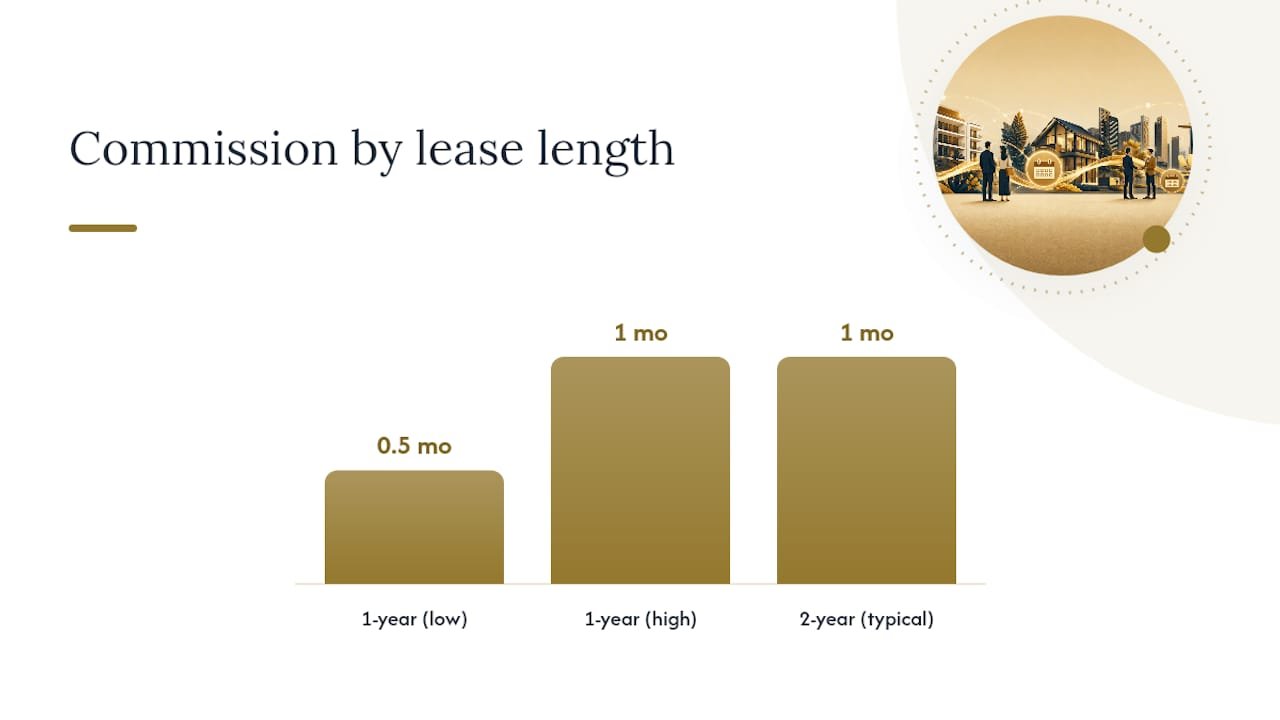
- Rental commission: 0.5 to 1 month’s rent for a 1-year lease; 1 month for a 2-year lease
- GST: 9%, and it must be stated as inclusive or exclusive in the EAA
These benchmarks are market convention, not statutory rates — CEA and industry commission guidelines function as a starting point for negotiation, not a fixed tariff. Platforms such as Registertoday can help you verify an agent’s standing and sanity-check a quoted rate before you sign anything.
Key Takeaways
Commission in Singapore is a negotiated, GST-sensitive figure that only becomes meaningful once converted into dollars against your actual transaction value and documented in a signed EAA.
| Point | Details |
|---|---|
| Know the benchmarks | Seller commission runs around 2%, buyer-side around 1% where charged, rental commission 0.5 to 1 month’s rent depending on lease length. |
| Confirm GST treatment | Always ask whether a quoted rate is inclusive or exclusive of the 9% GST before agreeing a figure. |
| Verify before you sign | Check every agent’s name against the CEA public register before engaging them or handing over documents. |
| Document everything in the EAA | Rate, payment trigger, GST treatment and termination terms must be written into the prescribed Estate Agency Agreement, not agreed verbally. |
| Use Registertoday for a sense check | Registertoday’s free valuations and negotiation support help you confirm whether a quoted commission is reasonable before you commit. |
Primary authoritative links to consult
- CEA guidance on engaging a property agent
- Gov
- Registertoday for local valuation and negotiation support
Table of Contents
- Co-broking: what it is and how commissions split in practice
- Seller-side commissions: rates, when they vary and a worked example
- Buyer-side commissions: when buyers pay and why they might choose to engage an agent
- Rental commissions: formulas for 1‑ and 2‑year leases and payment responsibility
- How to negotiate commission and the exact clauses to put in the CEA-prescribed Estate Agency Agreement
- CEA rules and verification: registrations, prohibitions and where to complain
- Editorial take: percentages mean nothing until they’re dollars
- Get your commission terms right before you sign anything
- Sources
Co-broking: what it is and how commissions split in practice
Co-broking happens when one agent represents the seller (or landlord) and a different agent brings the buyer (or tenant) to the deal. It’s the norm in Singapore, not the exception, because it widens the pool of prospective buyers a listing reaches without the seller needing to engage multiple agents directly.
The mechanics are simple once you see them laid out. If a seller has agreed 2% commission with their agent, that agent commonly splits it with the buyer’s agent, often 1% each, though the exact split depends on what the two agencies agree between themselves.
- The seller’s contractual commission stays the same regardless of how it’s divided between the two agents
- A buyer working with a co-broking agent typically pays nothing directly, because that agent is paid out of the seller’s commission
- Splits aren’t always 50/50; an agent who brought less marketing effort or a straightforward buyer might accept a smaller share
What this means for you as a client: your payment obligation is defined by your own EAA with your own agent, not by how that agent chooses to share the fee with a co-broking partner. Ask your agent directly whether the deal is co-broked and how the split works, since it can affect how motivated each side is to close quickly.
Seller-side commissions: rates, when they vary and a worked example
Seller-side commission on both HDB and private resale transactions sits around 2% of the transacted price as the common benchmark, though this moves depending on the property’s value, how much marketing the agent has to do, and whether the listing is exclusive.
A handful of factors nudge the rate up or down:
- Property value — very high-value units sometimes attract a slightly lower percentage because the absolute dollar amount is already substantial
- Exclusivity — an exclusive appointment (one agent only) often justifies the full 2%, since the agent is investing marketing spend without competing agents free-riding on the sale
- Marketing scope — professional photography, virtual tours and paid listing placements can be built into the rate or billed separately, so ask which applies
- Non-exclusive listings — spreading the mandate across several agents sometimes gives you leverage to negotiate a lower rate with each, since none of them has exclusivity to protect
Here’s what that looks like in dollars. On a S$1.2 million resale flat at a 2% commission, the fee comes to S$24,000. If the agent is GST-registered and charges GST on top, that 9% adds a further S$2,160, bringing the total to S$26,160. If the quoted 2%/specific-business-sectors/real-estate) already includes GST, you’d pay S$24,000 flat. That single word, inclusive or exclusive, is worth over two thousand dollars on a transaction this size, which is exactly why the EAA must spell it out rather than leave it to a verbal understanding.
Commission is typically earned and payable on completion, when the sale and purchase agreement is executed and the transaction legally closes, not simply when a buyer shows interest or makes an offer.
Buyer-side commissions: when buyers pay and why they might choose to engage an agent
In practice, most buyers in Singapore pay nothing directly to their agent, because the arrangement runs through co-broking: the seller’s agent shares part of their commission with the buyer’s agent, and the buyer’s out-of-pocket cost is zero.
So why would a buyer ever agree to pay an agent directly?
- Access to off-market or pre-launch listings that never reach public portals
- Dedicated negotiation support, particularly useful for first-time buyers unfamiliar with resale procedures or new launches
- Time saved on filtering listings, especially for buyers relocating from overseas who can’t view dozens of units in person
- Specialist knowledge of a niche segment, such as landed property or commercial units, where fewer agents are genuinely competent
If a buyer’s agent does ask for a direct fee, get the rate and trigger point written into your own agreement with them, rather than agreeing verbally “if the deal closes I’ll sort you out.” That informal approach is precisely the kind of arrangement CEA warns leads to disputes later.
Rental commissions: formulas for 1‑ and 2‑year leases and payment responsibility
Rental commission in Singapore follows a fairly consistent formula tied to lease length rather than a flat percentage of annual rent. For a 1-year lease, the typical range is 0.5 to 1 month’s rent. For a 2-year lease, it’s usually 1 month’s rent. In the large majority of cases, the landlord pays this fee, since they’re the one benefiting from securing a paying tenant.
That said, the split isn’t universal:
- High-rent expat lets, where the rent quantum is substantial, tend to see landlords bearing the full commission because the cost is proportionally small next to the rent they’ll collect
- Lower-rent room rentals sometimes shift some or all of the commission cost onto the tenant, particularly when a tenant’s agent has done the legwork of sourcing the room
- Co-broked rental deals split the landlord’s commission between the two agents involved, similar to how sale transactions work
Pro Tip: *Always ask whether the quoted rental commission figure includes GST.
How to negotiate commission and the exact clauses to put in the CEA-prescribed Estate Agency Agreement
Commission percentages aren’t handed down from a rulebook, which means there’s genuine room to negotiate, particularly on larger transactions or when you’re offering an agent exclusivity.
Useful negotiation levers include:
- Transaction size — a S$3 million sale might justify a slightly lower percentage than a S$600,000 one, since the absolute fee is still substantial
- Exclusivity — offering one agent sole rights to market your property is a fair trade for a modest rate reduction
- Reduced marketing scope — if you’re happy to handle viewings yourself or already have a buyer in mind, ask for a lower rate
- Repeat business — if you’re using the same agent to sell and then buy your next home, raise it as a package
Once you’ve agreed terms, the CEA-prescribed EAA needs to state:
- The exact commission rate or flat fee
- Whether GST is inclusive or exclusive
- The payment trigger (usually on completion, sometimes on signing the Option to Purchase)
- The agreement’s validity period and any post-term “tail” clause covering buyers introduced before expiry
- Who bears marketing costs, and whether they’re separate from commission
- Termination conditions and notice period
Pro Tip: Before you pay a single dollar, reconcile the invoice line by line against the signed EAA. If the invoice shows a rate, a GST treatment, or a fee category that doesn’t match what you signed, query it before payment, not after.
CEA rules and verification: registrations, prohibitions and where to complain
Every property agent operating in Singapore must be registered with CEA, and the fastest way to confirm this is to search their name or registration number on the CEA public register, which shows their licensed agency and current status.
A few checks and rules worth knowing:
- Verify before you engage, not after you’ve already handed over documents or deposits
- Dual representation is prohibited — one agent cannot legally act for both the buyer and seller (or landlord and tenant) in the same transaction, and Gov
- GST registration matters — only GST-registered agents or agencies can charge GST on top of commission, so ask directly whether theirs is registered before assuming a quoted rate is GST-inclusive
- Complaints and disciplinary records can be checked through CEA’s professional service manual, which also sets out the conduct standards agents are held to
Roughly speaking, treat the register check as a two-minute habit, not an optional extra. It costs nothing and it’s the single fastest way to rule out an unlicensed operator before money changes hands.
Common mistakes and red flags to avoid when agreeing commission
Most commission disputes trace back to a handful of avoidable habits. Watch for these:
- Verbal-only agreements — a WhatsApp message confirming “yes, 2% is fine” is not the same as a signed EAA, and CEA notes this is one of the most common sources of dispute
- Paying into a personal account — commission should go to the agency’s corporate account, never a salesperson’s personal bank details
- Pressure to sign exclusivity immediately — a legitimate agent will give you time to read the EAA before committing
- Blurred marketing costs — confirm which costs sit inside the commission and which are billed separately, and check the GST treatment on each
- Skipping the invoice check — always match the final invoice against the signed EAA before releasing payment
How Registertoday helps you get this right
Getting the commission conversation right matters more on a seven-figure transaction than almost anything else in the process. Registertoday has completed over $1 billion in property sales for clients across Singapore, built on free property evaluations, personalised negotiation support and detailed market gap analysis that helps clients see where a deal genuinely stands before they commit to any commission terms.
Practically, that support looks like:
- Help structuring and reviewing the EAA so the rate, trigger and GST treatment are unambiguous
- Verification of an agent’s CEA registration before you engage them
- Invoice reconciliation against the signed agreement before you pay
Clients consistently tell us the biggest source of stress in a property transaction isn’t the price negotiation itself, it’s the uncertainty around fees that were never properly documented.
Editorial take: percentages mean nothing until they’re dollars
That’s useful shorthand, but it’s also where most advice stops short, and it’s the wrong place to stop. A percentage tells you nothing about your actual exposure until it’s converted into dollars against your specific transaction value, and the GST question, inclusive or exclusive, is treated as an afterthought when it should be treated as a line item worth negotiating on its own terms.
The conventional advice to “just check CEA’s website” is correct but incomplete. Verification matters, but it’s a five-minute task that solves only the licensing question, not the commercial one. The real work is getting the EAA to state the rate, the trigger, the GST treatment and the termination terms in language specific enough that an invoice can be checked against it later.
If there’s one habit worth adopting from this entire guide, it’s treating the EAA as a working document you’ll refer back to, not a formality you sign and forget.
— Anderson
Get your commission terms right before you sign anything
Registertoday exists to take the guesswork out of exactly the questions this guide has walked through: what a fair rate looks like for your specific property, how to structure the EAA so nothing is left to a verbal understanding, and whether a quoted commission actually stacks up against comparable transactions.

Unlike working with a single agent whose rate you’ve no easy way to benchmark, Registertoday brings free property evaluations and personalised negotiation support to every client, backed by over $1 billion in completed sales across Singapore. That track record means the team has seen a wide spread of commission structures in practice, from straightforward HDB resales to more complex private and commercial deals, and can tell you quickly whether a rate you’ve been quoted is reasonable for your situation.
If you’re preparing to sell, start with a free home valuation to establish your property’s realistic market value, since that figure is what any commission percentage will actually be calculated against. If you’re buying, browse current listings to see completed and available transactions before you enter a negotiation of your own.
Sources
- What to take note of when engaging a property agent | Council for Estate Agencies
- Gov
- Property Agent Commission Singapore 2026: CEA & COA Rates | LovelyHomes
- Property agent commission and GST negotiation guide | LittleBigRedDot