
Choose B1 or B2 Industrial in Singapore: Avoid ISC Delays
B1 zoning covers clean, light industrial use with a nuisance buffer around 50 metres; B2 covers general and heavier industry with a nuisance buffer closer to 100 metres. That single distinction, set by the Urban Redevelopment Authority (URA) and enforced through National Environment Agency (NEA) siting rules, drives most of what follows: cost, approval risk, and who can lease from you.
TL;DR:
- B1 sites require a 50-metre buffer against residential uses, while B2 sites need around 100 metres, affecting location options and approval ease.
- Light industry and office-compatible activities are suitable for B1, but heavier manufacturing, chemical, or biotech processes usually require B2 zoning.
- An Industrial Siting Consultation is essential for borderline or unclear cases to ensure proposed use aligns with buffer and environmental thresholds before signing.
- The success of converting between B1 and B2 relies on formal applications and site-specific environmental and buffer assessments, often taking several months.
- Rental premiums are generally higher for B1 units due to broader tenant pools, while B2 space offers larger floor plates but faces narrower demand and industry sensitivity.
Table of Contents
- B1 vs B2 industrial: the URA rules that set the baseline
- What businesses can actually operate in B1 vs B2
- Nuisance buffers, ISC approval, and the paperwork that decides your timeline
- Choosing between B1 and B2: a practical decision checklist
- How Registertoday supports B1 and B2 industrial decisions
- Plot ratio and building height: where B1 and B2 diverge on density
- How B1 and B2 zoning shapes property value and rental yields
- Constraints that catch out B1 and B2 buyers differently
- Rezoning and switching between B1 and B2 uses
- Emissions, waste and environmental duties in B1 and B2 premises
- Why the zoning label matters less than most guides suggest
- Start your B1 or B2 search with Registertoday
- Where to verify B1 and B2 details yourself
- Sources
B1 vs B2 industrial: the URA rules that set the baseline
URA classifies industrial land into two working categories. Business 1 (B1) sites are reserved for clean and light industry, the sort of operation that produces minimal noise, smell, or vibration. Business 2 (B2) sites accommodate general industry, including heavier processes with a higher environmental footprint. Both zones sit under URA’s development control framework, which applies a 60:40 rule: at least 60% of gross floor area must go to the predominant industrial use, leaving a maximum of 40% for ancillary functions like offices, showrooms, or canteens.
The practical differences show up fast once you compare the two side by side.
- Environmental threshold: B1 tenants must operate below noise, odour, and emission limits that B2 tenants are permitted to exceed within their larger buffer.
- Buffer distance: B1 carries a roughly 50-metre nuisance buffer from residential and sensitive uses; B2 typically needs around 100 metres.
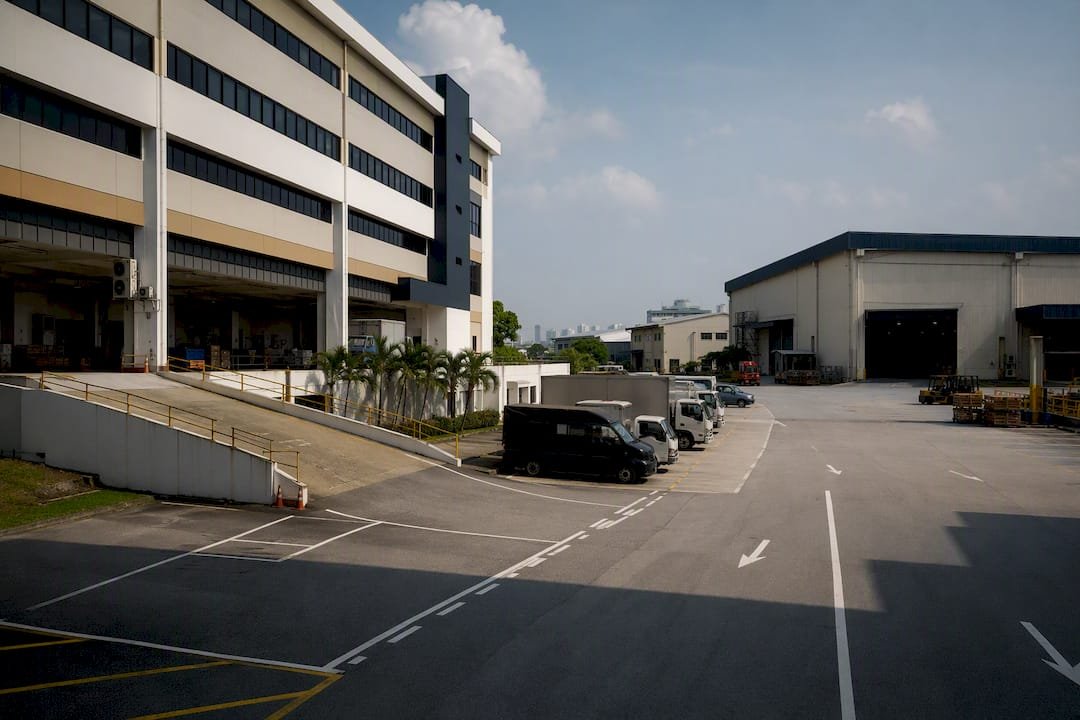
- Location pattern: B1 developments cluster nearer business parks and mixed-use fringes; B2 sites sit further out, often in estates such as Tuas or Senoko.
- Tenant image: B1 buildings tend to attract office-style fit-outs and client-facing operations; B2 buildings lean towards production floors and warehousing.
Neither zone is objectively “better.” The right one depends entirely on what your tenant does inside the unit, and that’s where the allowable-use lists matter more than the label on the URA map.
What businesses can actually operate in B1 vs B2
B1 zoning suits operations that could plausibly sit near an office park without disturbing anyone. B2 zoning exists precisely because some processes cannot.
- Electronics assembly and light manufacturing. Firms assembling components, testing devices, or doing precision work without heavy machinery fit comfortably in B1.
- Food packing and light processing. Packing, labelling, and light-touch food preparation are B1-appropriate; processes involving open flames, heavy frying, or strong odours usually push into B2 territory.
- Media, R&D and e-business. URA’s allowable uses guidance lists media production, research and development, and e-commerce fulfilment among core B1 predominant uses.
- Printing and publishing. Digital and offset printing operations sit within B1 so long as emissions stay within threshold.
- Metal fabrication and heavy workshops. Welding, cutting, and large-scale fabrication generate noise and particulates that require B2’s wider buffer.
- Large-scale logistics and freight consolidation. Big-box warehousing with constant heavy-vehicle movement generally needs B2’s road access and buffer allowance.
- Chemical and biotech processing. Certain chemical handling and biotech manufacturing are permitted in B2 subject to NEA clearance, but rarely in B1.
Ancillary uses complicate the picture slightly. One detail investors often miss: childcare centres can be approved within B1 developments, subject to sign-off from the Early Childhood Development Agency. It’s an edge case, but it explains why some B1 business parks feel more like campuses than factories.
Nuisance buffers, ISC approval, and the paperwork that decides your timeline
The buffer distances aren’t guidelines you can negotiate around; they’re the mechanism NEA uses to keep pollution and disturbance away from sensitive uses. A B1 site typically carries a 50-metre buffer, and B2 around 100 metres, measured against nearby residential blocks, schools, and other protected uses. The technical thresholds behind those distances sit in NEA’s Code of Practice for Pollution Control, which engineers and environmental consultants use to model noise and emission limits before a building plan is even submitted.
Where the intended use is unclear or borderline, an Industrial Siting Consultation (ISC) becomes the sensible first move. An ISC is a formal check with NEA to confirm whether a proposed activity is acceptable at a specific site, before you commit to a lease or a purchase.
- Submit an ISC when the trade description doesn’t map cleanly onto a listed allowable use.
- Expect NEA to assess noise, odour, and emission profile against the site’s buffer classification.
- Treat a clean ISC result as a condition precedent in your offer to lease or purchase, not an afterthought.
Beyond the ISC, expect building plan approval and, for certain trades, environmental or fire safety licences layered on top. Timelines vary by complexity, but straightforward B1 fit-outs typically clear faster than B2 applications involving process equipment.
Pro Tip: Never rely on a broker’s verbal assurance that “this trade is fine here.” Request the ISC outcome in writing before signing anything, particularly if your process involves any emission, however minor.
An allowable use is not automatically a guaranteed approval once you factor in site-specific buffer conflicts, and that gap catches out more buyers than the zoning label itself ever does.
Choosing between B1 and B2: a practical decision checklist
Zoning labels tell you what’s permitted in principle. They don’t tell you whether a specific unit fits your specific operation, which is why a short checklist beats a quick glance at a URA map.
- Map your environmental footprint first. List every process that generates noise, odour, vibration, or emissions, then check it against B1 thresholds before assuming B2 is simply the “safer, heavier” default.
- Weigh client access and image. If clients or investors visit the premises regularly, B1’s business-park adjacency usually serves you better than a B2 estate on the industrial fringe.
- Cost the fit-out realistically. B2 units often come cheaper per square foot, but heavier process equipment can mean higher fit-out capital expenditure that erodes the saving.
- Check tenant covenant strength for investment purposes. A B2 unit let to a single heavy-industry tenant carries different vacancy risk than a B1 unit suited to multiple light-industry trades.
- Confirm buffer conflicts before signing. Run the ISC or at least a preliminary buffer check against neighbouring land use, not just the zoning colour on the map.
- Factor in supply chain proximity. Logistics-heavy tenants need road access and loading bays that B2 estates are built around; light-industry tenants rarely need that scale.
A worked contrast makes the trade-offs concrete. A light-food packer fitting out a B1 unit near one-north can lean on ancillary office space, attract visiting corporate clients, and clear approvals relatively quickly because the process sits cleanly within B1 thresholds. A metal fabricator eyeing the same unit would likely fail an ISC outright and would need to look toward Tuas or Sungei Kadut instead, where the buffer allowance and estate design match its process footprint.
Industrial property isn’t a single asset class with two labels stuck on it. Capital available, tenant profile, and risk appetite should decide the subtype, and the zoning label comes second to that assessment, not first.
How Registertoday supports B1 and B2 industrial decisions
Working out which zone fits your trade is only half the job; finding a unit that actually clears an ISC without drama is the other half. Registertoday’s property search lets you filter industrial listings by zoning, size, and location across Singapore’s main industrial estates, so you’re not sifting through units that were never going to suit your process.
Because Registertoday structures deals to avoid Additional Buyer’s Stamp Duty exposure where applicable, industrial investors get a materially lower entry cost than a conventional purchase route. Beyond listings, the team runs free market valuations to sanity-check asking prices against comparable B1 and B2 transactions, and its transaction history, sitting above $1 billion in completed sales, reflects genuine familiarity with how these deals actually close. If you’re weighing a specific unit, request a home valuation before you go further, or flag the trade description to the team for an early read on regulatory fit.
Plot ratio and building height: where B1 and B2 diverge on density
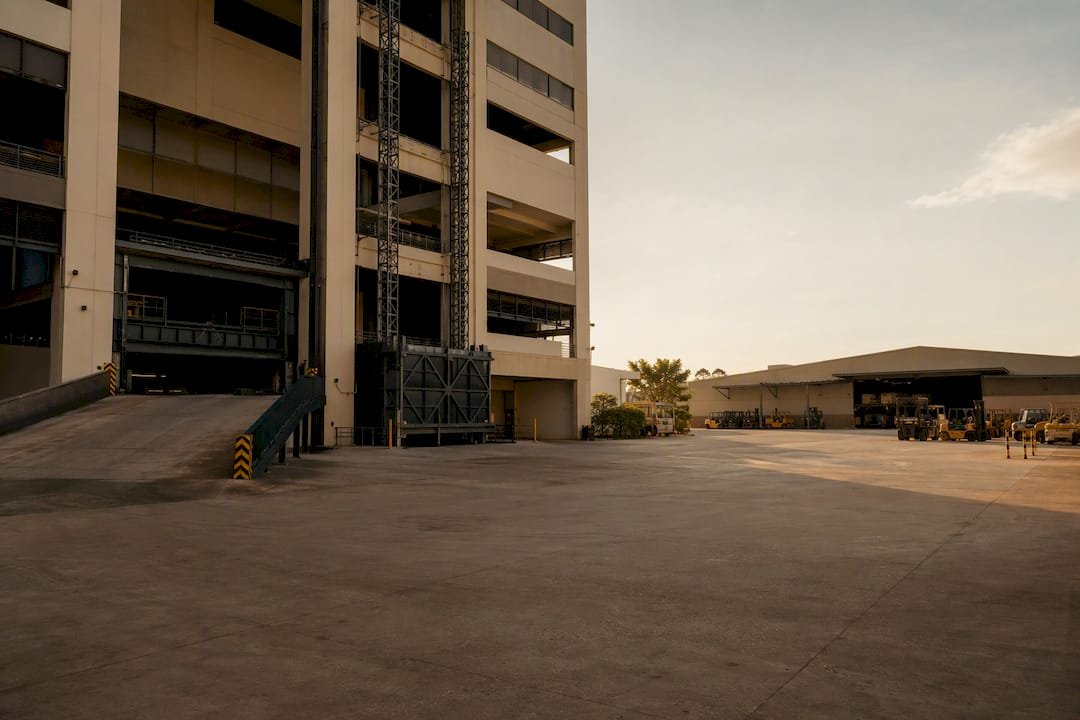
Development control parameters differ by estate and URA’s Master Plan, not by a fixed B1/B2 formula, but clear patterns show up across Singapore’s industrial precincts. B1 developments, often positioned closer to business park fringes, frequently carry higher plot ratios and taller permitted heights, reflecting their more office-adjacent, vertically stacked building typology. Multi-storey B1 buildings with ramp-up floors or cargo lifts are common in areas like Ubi and Kaki Bukit.
B2 developments, by contrast, tend to sit on larger single-storey or low-rise footprints, particularly where heavy machinery, large floor loading, or extensive yard space is required. Plot ratio in these estates is often lower simply because the building form doesn’t need height. That’s not a regulatory ceiling on B2 ambition. It’s a reflection of what heavy industry actually needs: floor space and clearance, not storeys.
Investors should always check the specific plot ratio and height control attached to the individual site through URA’s Master Plan, rather than assuming a blanket rule. Two B2 plots in different estates can carry different permitted densities depending on surrounding infrastructure, road capacity, and the URA planning intention for that precinct. This is one area where relying on a general industrial guide gets investors into trouble, because the numbers are site-specific, not zone-wide.
How B1 and B2 zoning shapes property value and rental yields
B1 units generally command a rental premium per square foot over comparable B2 space, largely because the tenant pool is wider. Light industry, tech firms, R&D outfits, and back-office functions can all occupy a B1 unit, which keeps vacancy periods shorter and supports steadier rental growth.
B2 units often trade and lease at a lower rate per square foot, but that headline number hides two offsetting factors. First, B2 floor plates tend to be larger, so absolute rental income per unit can still be substantial. Second, B2 tenant pools are narrower and more sensitive to industrial cycles: a downturn in manufacturing or logistics hits B2 vacancy harder than a broad-based slowdown hits B1.
For investors weighing capital growth against yield, the choice tracks tenant liquidity more than headline rate. A B1 unit in a well-connected estate tends to hold value because a wide range of trades can occupy it without triggering an ISC review. A B2 unit’s value is more tied to its specific buyer or tenant pool. If that pool shrinks, either through regulatory tightening or industry consolidation, the asset can become harder to move. That’s the tenant-profile-first logic that should guide any yield comparison between the two zones, rather than comparing raw rental rates alone.
Constraints that catch out B1 and B2 buyers differently
B1’s biggest constraint is the ceiling on what you can actually do inside the unit. Any process that creeps toward moderate noise, odour, or vibration risks falling outside B1 thresholds, even when the trade description sounds harmless on paper. Expansion plans are the usual trigger: a light assembly line that adds a heavier finishing process can suddenly need an ISC review it never required at a smaller scale.
B2’s constraints run the other way. The wider buffer and heavier-use allowance come with location trade-offs, further from the city centre, longer commutes for staff, and less foot traffic for any client-facing function. B2 buyers also face narrower resale and re-letting pools if their specific trade is unusual, since a chemical processing unit doesn’t attract the same breadth of prospective tenants as a general workshop space.
Businesses that want a significant showroom, retail counter, or office component alongside their industrial floor need to plan the ratio carefully, because exceeding that ceiling puts the entire development control approval at risk. It’s a common misstep among first-time industrial buyers who assume ancillary space scales with their preference rather than with a fixed regulatory limit.
Rezoning and switching between B1 and B2 uses
Changing a unit’s classification from B1 to B2, or vice versa, is not a simple form submission. It requires a formal application to URA, usually assessed alongside the development’s overall Master Plan zoning and often triggered by a change in use application tied to a specific tenant or buyer’s intended activity.
Moving from B1 to B2 use is comparatively rare in practice, since B2 already permits most B1-compliant activities; the more common scenario is a B2 building owner seeking to attract lighter, B1-style tenants without a full rezoning, which usually isn’t possible without URA’s formal reclassification. Moving a unit from B2 to B1 classification is more common where owners see stronger rental demand from light industry and want to capture that premium, but it requires demonstrating the site can meet B1’s tighter buffer requirements, which isn’t guaranteed if surrounding land use hasn’t changed.
Either direction typically involves submitting a change of use application to URA, alongside consultation with NEA if the proposed use profile shifts the site’s environmental footprint. Expect the process to take several months, and budget for the possibility that URA declines the reclassification if neighbouring buffer conditions don’t support it. This is not a process to attempt speculatively; it only makes sense when a specific, confirmed tenant or buyer is driving the change.
Emissions, waste and environmental duties in B1 and B2 premises
Environmental compliance scales with the buffer classification, and B1 tenants are held to materially tighter thresholds than B2 tenants on noise, odour, and airborne emissions. That’s the entire logic behind the 50 versus 100-metre buffer difference: B1 sites sit closer to residential and mixed-use areas, so NEA permits less environmental leakage before intervention.
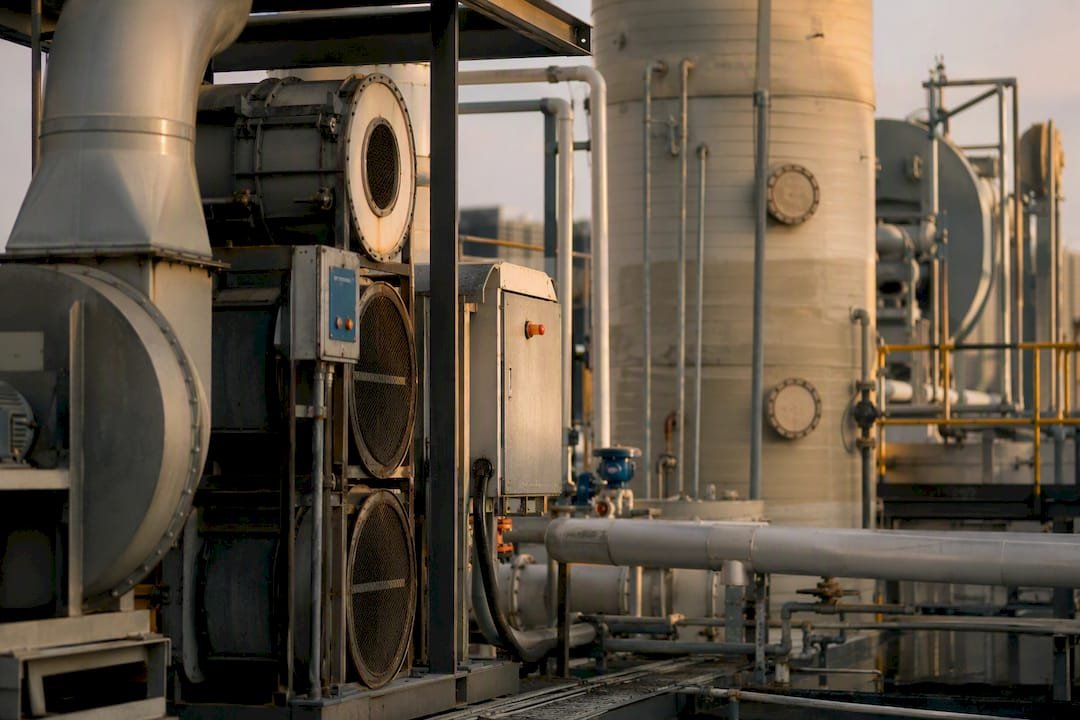
Waste disposal obligations differ by trade rather than by zone label alone, but B2 sites are far more likely to handle waste streams requiring licensed disposal, hazardous waste tracking, or trade effluent discharge permits. Any B2 tenant working with chemicals, metal finishing, or industrial by-products needs to confirm licensing requirements with NEA well before operations start, since retrofitting waste treatment infrastructure after occupation is expensive and disruptive.
B1 tenants aren’t exempt from environmental duties, they’re simply operating within a narrower band. Even light manufacturing or food packing generates waste streams, grease trap discharge, packaging waste, minor emissions, that need proper handling under NEA’s general guidelines. The Code of Practice for Pollution Control sets the technical benchmarks both zones are measured against, and it’s worth a direct read for any business planning a process change, since the thresholds are more specific than most lease agreements spell out.
Why the zoning label matters less than most guides suggest
Most explainers on this topic stop at defining B1 and B2, then leave readers to work out the consequences themselves. That’s backwards. The label is a starting filter, not a decision. What actually determines whether a unit works for you is the ISC outcome, the buffer distance against your specific process, and the tenant pool you’re either occupying or trying to attract.
Conventional advice tends to treat B2 as simply “B1 but bigger and cheaper.” It isn’t. B2 carries narrower resale liquidity, longer commutes for staff, and a tenant pool that shrinks faster in a downturn. Equally, B1 isn’t automatically the safer choice for every light-industry business, because its tighter environmental threshold can outgrow a business faster than owners expect once operations scale.
If there’s one thing worth prioritising above all else, it’s sequencing: confirm the ISC and buffer position before falling in love with a unit, not after. Zoning maps are freely available and easy to read. What they don’t show is whether your specific trade clears the environmental bar at that specific address, and that gap is where most industrial property disputes in Singapore actually originate.
— Anderson
Start your B1 or B2 search with Registertoday
Registertoday gives industrial buyers and tenants a direct route to verified listings, without the guesswork that comes from chasing zoning maps and broker assumptions separately. The platform’s structure also helps eligible investors sidestep Additional Buyer’s Stamp Duty exposure, which matters more on industrial deals than most buyers initially realise.

From here, the next step is straightforward:
- Browse current industrial listings filtered by zoning and estate.
- Request a free property valuation before making an offer.
- Ask the team for an early regulatory read on your trade before you commit to a lease or purchase.
Whether you’re chasing a B1 unit near a business park or a B2 site with heavier process allowance, Registertoday’s listings and valuation support are built to get you to a confident decision faster than working the search alone.
Where to verify B1 and B2 details yourself
- URA’s B1 allowable uses guidance for predominant and ancillary use lists.
- NEA’s Industrial Siting Consultation guidance for buffer and approval steps.
- URA’s Master Plan portal for site-specific plot ratio and zoning maps.
This article is general information, not a substitute for advice from a qualified financial advisor. Consult a qualified financial professional about your own circumstances before acting on anything here.