

Singapore Commercial Property: 5 Zoning Checks to Avoid ABSD Surprises
Pure commercial property purchases in Singapore generally do not attract Additional Buyer’s Stamp Duty (ABSD). ABSD applies to residential property acquisitions, as confirmed by IRAS’s stamp duty schedule, while a standard commercial deal instead falls under Buyer’s Stamp Duty and ongoing property tax rules. Mixed-use assets, shophouses and sites with a residential quantum can change this outcome; the exemption depends on classification, not on what the listing calls the property.
TL;DR:
- Commercial property purchases in Singapore are generally exempt from ABSD but are subject to Buyer’s Stamp Duty and property tax based on assessed rental value.
- BSD is tiered and can reach approximately 109,600 dollars on a 3 million dollar property, with deadlines for stamping set at 14 or 30 days depending on where documents are signed.
- Mixed-use assets and shophouses may carry residential components that trigger ABSD, requiring buyers to verify zoning and land use specifics before contracting.
- Property tax on non-residential properties is a flat 10% of the Annual Value, which could be substantial even for vacant units, and GST may also apply depending on the seller’s registration.
- Buyers should conduct thorough due diligence on zoning, valuation, ownership structure, and remission routes before signing, to avoid unexpected costs and classify property correctly.
Table of Contents
- Which stamp duties and taxes apply: BSD, SSD and property tax
- Mixed-use, shophouses and zoning: when parts of an asset remain residential
- Timing, stamping and payment process: deadlines and penalties
- Due diligence checklist before signing: zoning, valuation, ownership structure and remission routes
- Acquisition and ownership costs beyond ABSD: financing, GST, property tax and operating costs
- Author perspective and practical rules of thumb from Register Today
- What the conventional ABSD advice gets wrong
- How Register Today can help with commercial acquisitions
- FAQ
- Sources
Which stamp duties and taxes apply: BSD, SSD and property tax
ABSD and Buyer’s Stamp Duty are not the same tax, and conflating them is the most common costing error buyers make. ABSD is charged only on residential property acquisitions, while BSD applies to every property purchase, residential or commercial, and is calculated on the higher of the purchase price or market value using a dedicated non-residential schedule, according to IRAS.
The non-residential BSD schedule is tiered:
- 1% on the first $180,000 of value.
- 2% on the next $180,000.
- 3% on the next $640,000.
- 4% on the next $500,000.
- 5% on the remaining amount above $1,500,000.
A commercial unit valued at $3,000,000 attracts BSD of roughly $109,600 under this non-residential schedule, calculated by applying each tier in sequence rather than a flat rate on the full price.
Seller’s Stamp Duty can apply where a commercial property is sold within a holding period specified in the relevant IRAS framework, so sellers should check their own timeline before listing. Property tax then becomes the recurring cost that buyers tend to underestimate, since it is charged annually on a non-residential property’s assessed rental value rather than on the purchase price. Budgeting for BSD at completion and property tax every year gives a far more accurate picture of total ownership cost than focusing on the ABSD exemption alone.
Mixed-use, shophouses and zoning: when parts of an asset remain residential
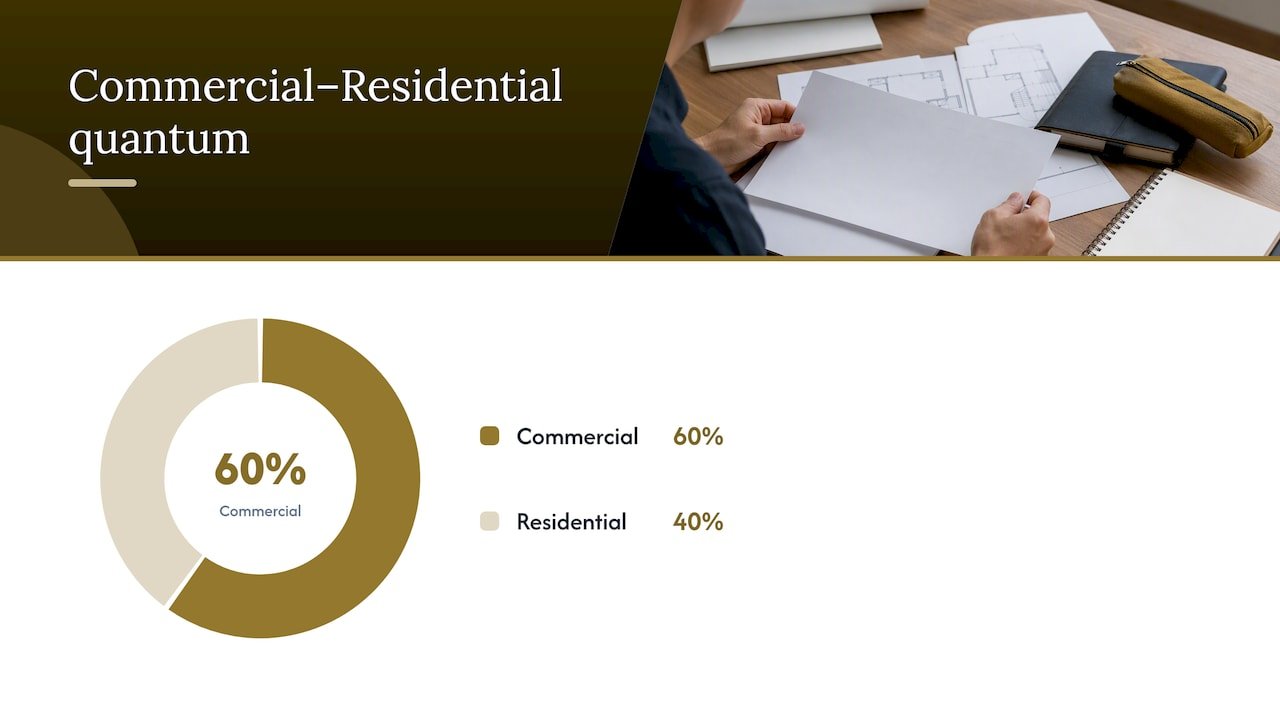
Shophouses, conservation units and mixed commercial and residential developments are where the ABSD exemption breaks down. URA’s guidance on mixed commercial and residential developments describes allocations, such as a 60/40 split between commercial and residential quantum, that determine how a site is zoned and used. IRAS then applies its own apportionment to work out how much of a transaction is treated as residential for duty purposes, which means a property marketed as “commercial” can still carry a residential component that triggers ABSD.
Shophouses are the clearest example: many retain an upper-floor residential use even where the ground floor is zoned commercial, and URA’s own materials use shophouses and shopflats as worked illustrations of this split. A buyer who assumes the whole building is commercial because the signage says so can be caught out at stamping.
Before contracting, buyers should:
- Pull the title particulars and land use schedule for the specific lot.
- Check the URA master plan extract for the site’s zoning classification.
- Confirm with a conveyancer or valuer whether any residential quantum applies to the unit being purchased.
Where the classification is unclear, a direct query to URA or a review by a property valuer is worth the delay, since an incorrect assumption at this stage carries a duty cost that cannot easily be unwound later.
Timing, stamping and payment process: deadlines and penalties
Stamp duty timing is fixed by law, not negotiable with a conveyancer, and missing it carries real financial consequences. IRAS sets the deadline at 14 days from execution for documents signed in Singapore, and 30 days from receipt in Singapore for documents executed overseas.
A document is only considered “duly stamped” once duty has been paid in full, and an unstamped or late-stamped document can attract penalties and interest, as well as complications when relying on it in legal proceedings. A practical sequence looks like this:
- Instruct a conveyancer as soon as the option is exercised, not after it is accepted.
- Confirm whether the sale and purchase agreement was executed in Singapore or overseas, since this sets the 14 or 30-day clock.
- Arrange funds for BSD ahead of the deadline rather than after it, since banks and solicitors need lead time to process payment.
- Retain the stamped document as proof of compliance for financing, resale or audit purposes.
Pro Tip: Diarise the stamping deadline the day the option is exercised, not the day the agreement is signed, since the clock can start earlier than buyers expect.
Due diligence checklist before signing: zoning, valuation, ownership structure and remission routes
Getting the duty position right starts well before the option to purchase is signed. Zoning confirmation comes first: a buyer should verify the legal land use and approved use through the URA master plan rather than relying on an agent’s description, since URA’s mixed-use guidance shows how easily a site can carry more than one classification.
A professional valuation matters just as much. It establishes a defensible market value for BSD purposes and gives a buyer a baseline against which to judge the Annual Value history that will later drive property tax.
Ownership structure is the third variable, and it is often overlooked. Buying through an individual, a company or a property-holding entity can change the duty and conveyance treatment, and MOF’s guidance on property market measures notes that entities can face different rates or additional conveyance duties depending on structure.
Before signing, confirm:
- The URA zoning and approved use for the exact unit, not the building as a whole.
- A current valuation and the Annual Value history for the property.
- Whether the intended ownership vehicle (individual, company or property-holding entity) changes the duty outcome.
- Whether any remission route applies, filed through myTax Portal where eligible.
Pro Tip: Ask your conveyancer to confirm classification and ownership treatment in writing before you exercise the option, not after.
Acquisition and ownership costs beyond ABSD: financing, GST, property tax and operating costs
A zero ABSD bill does not mean a low-cost purchase. Property tax on non-residential property is charged at a flat rate of 10% of Annual Value, according to IRAS’s property tax rates, and Annual Value is based on estimated market rent rather than the rent a unit actually earns. A unit sitting vacant or under-let can still generate a tax bill calculated on comparable market rates.
Financing costs, vacancy risk and maintenance charges all sit alongside this, and GST can apply to the sale or rental of commercial property depending on the seller’s registration status, which is worth confirming before completion.
A simple worked example illustrates the layering of costs on a $3,000,000 commercial unit:
These figures are illustrative only, built on a hypothetical $3,000,000 purchase and a $150,000 Annual Value, and are meant to show how the components stack rather than to forecast any specific deal.
Author perspective and practical rules of thumb from Register Today
Five checks separate a clean commercial purchase from a costly surprise: confirm the URA zone for the specific unit, verify the Annual Value history rather than trusting a rental projection, never rely on marketing descriptions over title particulars, bring in a valuer before negotiating price, and review the ownership structure with a conveyancer before signing.
The team structures its service around detailed market evaluations that identify gaps between a listing’s marketing and its actual zoning and valuation position. Readers planning a commercial acquisition can request a property evaluation before committing to an option, which gives a documented baseline for both valuation and duty exposure.
What the conventional ABSD advice gets wrong
Most guidance on ABSD and commercial property stops at the headline exemption and moves on, which leaves buyers under-prepared for the cases that actually cost money: shophouses, mixed-use blocks and sites with an unclear residential quantum. The exemption is real, but it is a classification outcome rather than a blanket rule, and that distinction only becomes visible when someone checks the URA zoning and the title particulars line by line.
The bigger gap in conventional advice is cost framing. Buyers fixate on avoiding ABSD and then underestimate property tax, which is charged annually on an assessed rental value that has nothing to do with what the buyer intends to use the space for. A buyer who prioritises zoning confirmation and Annual Value history before price negotiation ends up with a far more reliable cost picture than one who negotiates first and checks classification later.
— Anderson
How Register Today can help with commercial acquisitions

Buying commercial property without the ABSD burden is already the easier route, and a specialised team can help make sure the rest of the transaction is just as clean. Services offered may include property valuations, commercial listings, and personalised negotiation support, backed by detailed market evaluations that flag zoning or classification issues before they become stamping problems.
If you are weighing a commercial purchase, a sensible sequence looks like this:
- Request a free property valuation to establish a defensible market value.
- Browse current commercial listings to shortlist suitable units.
- Use professional negotiation support to agree terms once zoning and valuation are confirmed.
For readers who want a worked BSD calculation alongside their own figures, OneMarinaGardens’ BSD guide offers a useful companion reference.
FAQ
What are the ABSD rates for 2026?
ABSD rates apply to residential property acquisitions and vary by buyer profile, including citizens, permanent residents, foreigners and entities, as set out in IRAS’s stamp duty rates. A pure commercial purchase falls outside this schedule and is instead charged Buyer’s Stamp Duty under the non-residential schedule.
Is there ABSD for shophouses?
Shophouses can attract ABSD where part of the building retains a residential use, since URA’s mixed-use guidance shows many shophouses carry a residential quantum even when the ground floor is zoned commercial. Buyers should confirm the exact zoning and apportionment for the specific unit before assuming it is duty-exempt.
What is the ABSD rate in Singapore?
ABSD rates in Singapore are set by IRAS and apply specifically to residential property purchases, with the rate depending on the buyer’s residency status and the number of residential properties already owned, according to IRAS’s rate table. Commercial property purchases are generally not subject to ABSD at all.
How do you value commercial property?
Commercial property valuation typically draws on market comparables, income potential and the property’s Annual Value history, which IRAS determines using estimated market rent. A professional valuer or a free evaluation service can confirm a defensible figure before a buyer negotiates price or budgets for property tax.


