

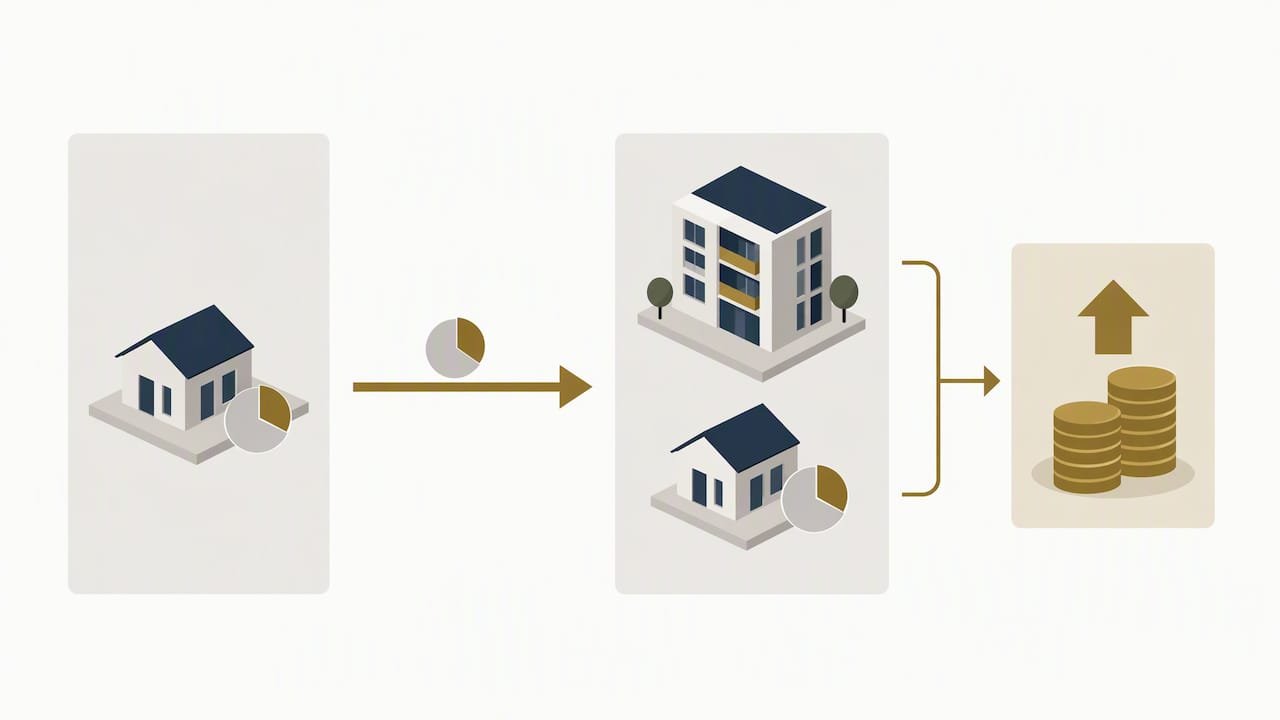
Avoid 20–65% ABSD When Transferring Property to a Spouse in Singapore
You can transfer property to a spouse in Singapore through an HDB change of flat ownership, a private transfer by gift or sale, or decoupling, each carrying its own stamp duty exposure, CPF refund requirements and eligibility checks. Expect stamp duty to apply even on a gift, since duty is assessed on market value rather than price paid, and expect HDB to run strict occupation and citizenship checks before approving any change. The sensible first step is gathering your documents and instructing a solicitor to confirm Additional Buyer’s Stamp Duty, CPF and HDB implications before signing anything.
TL;DR:
- Stamp duty is assessed on market value for property transfers to a spouse, regardless of whether the transfer is a gift or sale.
- ABSD rates can range from 20% to 65%, especially if the receiving spouse already owns other properties, increasing the potential tax exposure.
- HDB flat ownership transfers require meeting strict eligibility checks, occupation obligations, and may trigger resale levies or loan settlement conditions.
- Early engagement with a solicitor is essential to coordinate CPF refunds, lender consent, and ensure timely compliance with IRAS remission deadlines.
- The best transfer approach depends on individual circumstances, such as estate planning, ABSD considerations, and specific HDB eligibility requirements.
Table of Contents
- How HDB flat ownership change to a spouse works
- How private property transfers to a spouse work
- Stamp duties and tax consequences of transferring to a spouse
- Step-by-step checklist for completing a transfer
- Common pitfalls that cause delays or unexpected tax bills
- How Register Today supports property transfers between spouses
- When transferring property to a spouse makes sense
- Start with a valuation before you transfer
- FAQ
- Sources
How HDB flat ownership change to a spouse works
HDB allows a change in flat ownership outside a sale when the incoming owner is an immediate family member, but every applicant must meet prevailing eligibility schemes at the point of application, not at the point the flat was first bought. Age, citizenship and permanent residency status are all checked afresh, and the flat’s ownership structure must stay within HDB’s maximum number of owners.
The incoming spouse generally has to occupy the flat, since HDB ownership is tied to actual residence rather than investment holding. A change in ownership can also trigger the resale levy if HDB treats the change as the incoming owner having enjoyed a housing subsidy, which affects future flat purchases.
Key points to confirm before applying:
- Both parties must meet HDB’s eligibility schemes current at the time of the application, not when the flat was originally purchased.
- The incoming owner must usually occupy the flat and be named within HDB’s permitted ownership limits.
- A resale levy may apply depending on subsidy history, and outstanding loan or valuation conditions must be settled first.
- HDB handles much of the conveyancing itself through its own procedures, though private solicitors are still needed for CPF or mortgage matters; applicants submit required forms and supporting documents directly to HDB.
How private property transfers to a spouse work
Private residential property offers three realistic routes to move a share to a spouse: an inter vivos gift, a sale or part sale, and decoupling, where one spouse buys out the other’s share entirely to free up the seller’s name for a future purchase without Additional Buyer’s Stamp Duty. Gifting suits couples consolidating ownership for estate or succession reasons, a part sale suits those wanting partial consideration recorded, and decoupling is typically used to position one spouse to buy a second property under their own name.
Every route needs a conveyancing solicitor, since a licensed law firm must handle the transfer instrument, check title, confirm market valuation and liaise with the bank if there’s an existing mortgage. Lenders must consent to any change in ownership, and the outgoing party’s share of the loan needs formal discharge or refinancing before the transfer is lodged.
Where CPF funded the original purchase, the outgoing owner is normally required to refund the CPF monies used, plus accrued interest, back into their CPF account before the transfer completes.
- Gifting moves a share without a sale price but still requires a market valuation for duty purposes.
- A part sale records partial consideration and may change the stamp duty calculation accordingly.
- Decoupling fully removes one spouse from the title, often to enable a separate property purchase later.
- Lender consent and CPF refund arrangements typically take longer to resolve than the legal paperwork itself, so early engagement avoids delay.
Stamp duties and tax consequences of transferring to a spouse
IRAS guidance on Buyer’s Stamp Duty) confirms that a transfer is treated as an acquisition for duty purposes regardless of whether money changes hands, so duty is calculated on the property’s market value even when the transfer is a gift between spouses. This catches many couples by surprise, since “no money changed hands” does not mean “no duty payable”.
Additional Buyer’s Stamp Duty is the bigger risk. Acquiring your spouse’s share can count as a fresh acquisition, and if the receiving spouse already owns another property, that acquisition may fall into a higher ABSD band.
ABSD rates range from 20% to 65% depending on the buyer’s profile and number of properties already owned, according to IRAS’s remission guidance for married couples, which shows how steep the exposure becomes without proper planning.
Remission is possible through a conveyance direction, but IRAS sets strict conditions, including a documentary deadline commonly within two months of the contract date, and missing that window generally forfeits the remission.
- Market value, not sale price, is the figure IRAS uses to compute stamp duty on any transfer.
- ABSD can apply to a spouse’s share transfer if the receiving party already holds other property.
- Conveyance-direction remission requires meeting IRAS’s timing and documentary conditions precisely.
- A partner resource worth bookmarking for a quick rate check is this ABSD rates guide for 2026.
Step-by-step checklist for completing a transfer
A transfer to a spouse generally follows a predictable sequence once you’ve decided on gifting, sale or decoupling.
- Instruct a conveyancing solicitor and confirm which route (gift, sale, decoupling) suits your situation.
- Obtain a market valuation of the property for stamp duty and lender purposes.
- Draft the transfer instrument or sale and purchase agreement.
- Secure lender consent and arrange CPF refund coordination if CPF funded the original purchase.
- Execute documents, pay stamp duty and any ABSD due, then lodge the instrument with the Singapore Land Authority.
Have these documents ready from the outset: NRICs, marriage certificate, title deed or HDB lease, loan statements, CPF withdrawal notices and, for HDB flats, the relevant change-in-ownership forms.
Expect the legal process to run several weeks once lender and CPF clearances are in hand, with cost buckets covering the valuation fee, legal fees and the stamp duty itself, which varies with property value and ABSD exposure.
Pro Tip: Check ABSD treatment and lodge any conveyance-direction application within two months of the contract date, since IRAS remission windows are strict and rarely extended.
Common pitfalls that cause delays or unexpected tax bills
The most frequent HDB trap is an incoming owner who fails eligibility checks, whether through recent private property disposal, ownership within a lookback period, or an inability to meet the occupation requirement.
On the tax side, many couples assume a gift avoids stamp duty entirely, only to find duty assessed on market value, or discover ABSD applies because the receiving spouse already owns property elsewhere. Missing the conveyance-direction deadline is another costly error that forfeits remission outright.
- Confirm HDB eligibility and occupation requirements before committing to any change of ownership.
- Check ABSD exposure based on the receiving spouse’s existing property holdings, not just the transfer itself.
- Arrange lender consent and CPF refund coordination early, since these often take longer than the legal paperwork.
- Engage a solicitor at the planning stage, not after a transfer price has already been agreed.
How Register Today supports property transfers between spouses
We offer a free property valuation to help couples understand current market value before instructing a solicitor, which matters since stamp duty is calculated on that figure. Our platform focuses on Singapore property transactions, and we provide negotiation support where a sale or part sale forms part of the arrangement. We don’t replace conveyancing solicitors, who remain essential for lodging transfer instruments and handling CPF or ABSD compliance, but we help couples walk into that process with clearer market context.
When transferring property to a spouse makes sense
Transferring to a spouse works best for estate consolidation or clearing the way for one party to buy separately without ABSD complications. It makes less sense when the receiving spouse’s existing property holdings push the transfer into a high ABSD band, or when HDB eligibility simply isn’t met. Run the tax and HDB checks before the legal paperwork starts, not after.
— Anderson
Start with a valuation before you transfer
Before any transfer, gifting decision or decoupling arrangement, it helps to know what the property is actually worth today. Our free property valuation gives couples a market-based starting point, which feeds directly into the stamp duty calculation your solicitor will need.

We also offer negotiation support where a sale or part sale is involved, and broader services covering buying, selling and renting property across Singapore. What we don’t do is file the legal transfer itself: that step belongs with a conveyancing solicitor who can manage CPF refunds, lender consent and ABSD remission paperwork correctly.
- Start with a free valuation to establish the market value your solicitor will need for duty calculations.
- Use our negotiation support if a sale or part sale is part of your transfer plan.
- Bring your solicitor in early so legal filing and valuation work run in parallel rather than back to back.
FAQ
How do I transfer assets to my spouse in Singapore?
For property specifically, you’ll choose between an HDB change of ownership, a private gift or sale, or decoupling, each requiring a conveyancing solicitor and a market valuation. Stamp duty applies based on market value regardless of the route, and CPF refunds may be required if CPF funded the original purchase.
Can I transfer ownership of an HDB flat to my wife?
Yes, provided your wife meets HDB’s prevailing eligibility schemes at the time of application, including citizenship or permanent residency status and the occupation requirement. A resale levy may apply depending on subsidy history, so check this before applying.
What is the best way to transfer property between family members?
The right route depends on whether you want full ownership transfer, partial consideration recorded, or ABSD-free positioning for a future purchase, which points towards gifting, a part sale, or decoupling respectively. A solicitor can confirm which option fits your tax position and HDB eligibility before you commit.
What are the disadvantages of joint ownership?
Joint ownership can complicate a future property purchase, since both owners’ existing holdings count towards ABSD calculations on any new acquisition. It can also limit flexibility if one party later needs to transfer or sell their share, since lender consent and CPF refund arrangements add time to any change.
Sources
Rules and rates shift, so it’s worth checking primary sources directly before acting. Start with IRAS’s stamp duty guidance for remissions and reliefs, HDB’s change-in-ownership terms and conditions for resale levy and documentation detail, and FamilyAssist’s guidance on how transfers interact with matrimonial matters.


