

Avoid S$4,000 fines: Rent with pets in Singapore in 2026
Yes, renting with pets is possible in Singapore, but permissions and limits depend entirely on property type. Before searching, confirm three things: whether the flat, condo or house allows your pet under HDB or condo by-laws, whether your cat is microchipped and licensed under the Cat Management Framework, and whether your landlord has given written permission.
TL;DR:
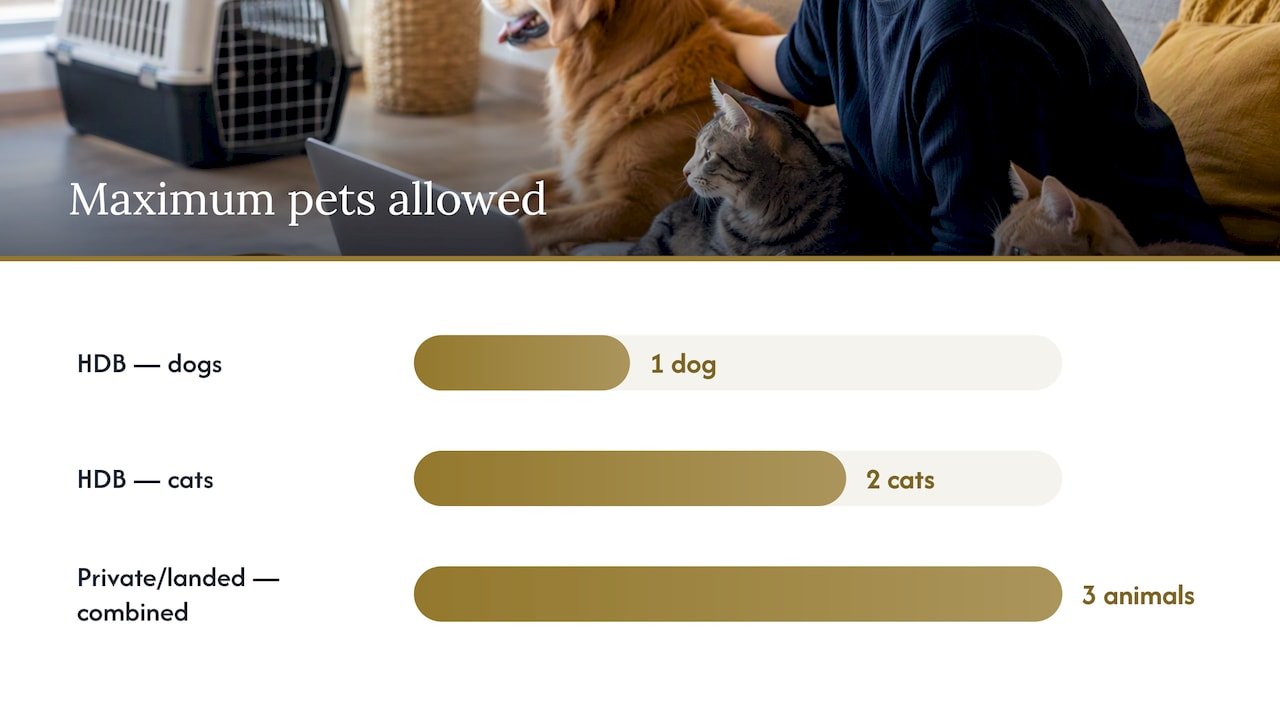
- HDB flats permit only one approved dog and up to two licensed cats, with fines of up to S$4,000 for violations.
- Pet owners must microchip and license their cats via PALS, completing a free online course before approval is granted.
- Landlords prefer written permission specifying pet breed and number, and often expect deposits, cleaning responsibilities, and clear rules.
- Private and landed homes allow up to three cats and dogs combined, but individual tenancy agreements can still restrict or prohibit pets.
- Finding pet-friendly rentals is easier through portals with filters, local groups, and approaching landlords directly with documentation ready.
Table of Contents
- Rules by property type: HDB, condo and private or landed properties
- Cat licensing and microchipping: what tenants must do now
- Tenancy clauses and negotiation: a practical checklist for renters
- How to find pet-friendly rentals in Singapore: platforms, groups and viewing tactics
- Compliance checklist and records to keep
- Author perspective: a short note on responsible pet tenancy
- How Register Today helps renters find and secure pet-friendly homes
- FAQ
- Sources
Rules by property type: HDB, condo and private or landed properties
Each property type in Singapore carries its own pet allowances, and understanding the short term rental rules in Singapore matters more than most renters expect.
For HDB flats, the rules are specific: one approved dog breed per flat, and up to two licensed cats per flat once the Cat Management Framework took effect. Breaching these limits can result in fines of up to S$4,000.
Condos work differently. The lease itself may permit pets, but the management corporation’s by-laws can override that with additional house rules. Some developments ban pets from lifts, gardens or swimming pool decks, and enforcement varies widely between buildings, as local reporting on condo disputes has shown.
Private and landed homes offer the most flexibility. AVS guidance allows up to three cats and dogs in combination on private premises, though individual tenancy agreements can still restrict or ban pets regardless of what AVS permits.
- HDB: one approved dog, up to two licensed cats, fines up to S$4,000 for breaches.
- Condo: by-laws and MCST house rules vary; common areas are often restricted.
- Private or landed: up to three cats and dogs combined, subject to the landlord’s own terms.
If HDB restrictions rule out your pet, shift your search towards private or landed stock early rather than wasting time on flats that will never approve your application.
Cat licensing and microchipping: what tenants must do now
Every pet cat in Singapore must be microchipped and licensed through the PALS platform run by AVS. First-time applicants also need to complete a free, one-time online pet ownership course before the licence is issued.
The transition period that began on 1 September 2024 ended on 31 August 2026. Keeping an unlicensed cat beyond that date may now constitute an offence, so any tenant still holding off should treat this as urgent rather than optional.
During the transition, AVS ran dozens of free microchipping and licensing drives and offered the Pet Carers Support Scheme to help lower-income households meet the cost.
A significant number of pet cats had been licensed by the end of August 2025, showing how quickly owners responded to the new scheme, with a notably high share of those cats sterilised.
Before approaching any landlord, work through this checklist:
- Microchip your cat and register it through PALS without delay.
- Complete the online course if this is your first licence application.
- Keep your receipt and licence number stored somewhere easy to retrieve.
- Bring proof of licensing to viewings and tenancy negotiations.
Landlords increasingly ask for this documentation upfront, and having it ready signals a tenant who takes compliance seriously.
Tenancy clauses and negotiation: a practical checklist for renters
A verbal “yes” from a landlord is worth little once a dispute arises. Written terms protect both sides, so request these specific clauses before signing anything.
- Explicit written permission naming the pet, breed and number allowed.
- Clear terms on any pet deposit, including whether and how it is refunded.
- A defined cleaning responsibility, especially for carpets or upholstery.
- A cap on the number of animals and any restriction on future additions.
- Rules on pet-sitting, boarding or guests bringing animals into the unit.
- Termination conditions tied only to genuine nuisance, not blanket pet objections.
Negotiation works best when you offer something concrete in return. A slightly higher refundable deposit, vet records showing vaccinations and sterilisation, or references from a previous landlord all reduce a landlord’s perceived risk. Offering a short trial period or an in-person meet-and-greet with the pet can also ease hesitation.
Watch for red flags: a landlord who refuses to put permission in writing, a blanket ban with no willingness to discuss specifics, or an attempt to charge a non-refundable “pet fee” dressed up as a deposit. None of these protect you, and all of them tend to signal future friction.
Pro tip: Propose a move-out inspection checklist alongside a professional cleaning clause. It reassures landlords that any pet-related wear will be addressed, not ignored.
How to find pet-friendly rentals in Singapore: platforms, groups and viewing tactics
Searching smart saves weeks. Use property portals that let you filter for pet-friendly listings and set saved alerts, including Register Today’s advanced search, so new matches reach you before they are snapped up.
When portal listings run thin, widen the net. Private landlords and landed-property owners are often more open to negotiation than large condo developments, partly because they are not bound by MCST by-laws.
- Join local Facebook groups and pet-owner forums where tenants share leads.
- Ask veterinary clinics and shelter noticeboards, which often hear about pet-friendly vacancies first.
- Bring your cat’s PALS licence, microchip ID and vaccination or sterilisation records to every viewing.
- Prepare a short video showing calm behaviour, or a reference from a previous landlord or vet.
Private estates and landed enclaves tend to yield more pet-friendly stock than high-rise condos, and approaching landlords with documentation in hand, rather than promises, consistently speeds up approval.
Compliance checklist and records to keep
Staying compliant protects both your tenancy and your pet. Confirm property type rules first, then secure written landlord permission, then make sure microchipping and licensing are complete with the receipt and PALS licence number kept on file.
- Keep your licence, microchip ID and vet records together in one folder.
- Retain cleaning invoices and any written agreements from your landlord.
- Control pets in common areas and clean up immediately after them.
- Notify your landlord promptly if any incident or complaint arises.
| Document | Why it matters |
|---|---|
| PALS licence and microchip ID | Proves legal compliance under the Cat Management Framework |
| Vaccination and sterilisation records | Reassures landlords and supports negotiation |
| Written landlord permission | Prevents disputes over pet clauses later |
| Cleaning and repair invoices | Evidence of upkeep if deposit disputes occur |
Our team at Register Today works with vetted listings and can support tenants in assembling this documentation when approaching landlords directly.
Author perspective: a short note on responsible pet tenancy
Renting with pets works best when documentation replaces assumption. A written agreement, a licensed cat and a tidy paper trail do more to prevent disputes than any amount of goodwill. Good neighbours and calm pets go hand in hand with proactive paperwork, not after the fact. If you want tailored help securing a pet-friendly tenancy, reach out to our team.
— Anderson
How Register Today helps renters find and secure pet-friendly homes
Finding a pet-friendly home in Singapore takes more legwork than a standard rental search, and that is exactly where our team can take weight off your shoulders. We maintain listings across HDB, condo and private stock, which means we can point you towards units where pet approval is realistic rather than hopeful.

- We help filter searches for pet-friendly condos, private homes and landed properties.
- We assist with negotiation so pet permission ends up in writing, not just spoken.
- We offer a free property valuation for landlords weighing up whether to allow pets.
- We support tenants in preparing documentation before approaching a landlord.
Start by gathering your pet’s licence, vaccination records and any references, then search current listings or get in touch so our team can match you with a pet-friendly rental and help you lock in written permission from day one.
FAQ
Is it illegal to have cats in HDB flats in Singapore?
No, cats are allowed in HDB flats, but each flat may keep up to two cats and every cat must be microchipped and licensed under the Cat Management Framework. Breaching the limit or keeping an unlicensed cat can lead to fines.
Can you have a pet as a tenant?
Tenants can keep pets, but only where the property type permits it and the landlord has given written consent. HDB, condo and private properties each carry different limits, so check the relevant HDB pet guidance or condo by-laws before signing a lease.
Can I leave my dog alone in a pet-friendly rental?
Most tenancy agreements do not set a specific rule on this, but landlords generally expect pets to be supervised enough to avoid noise complaints or damage. Checking your lease for any nuisance clause and discussing expectations with your landlord upfront avoids later disputes.
Can I let my friend stay in my HDB for free?
HDB flats are governed by occupancy and subletting rules separate from pet rules, and allowing a friend to stay long term without proper approval can breach your lease terms. It is worth checking HDB’s own guidance on occupancy before making any informal arrangement.
Sources
- AVS announces finalised Cat Management Framework with licensing and microchipping for pet cats starting 1 September 2024
- Keeping pets (HDB guidance)
- Cat ownership limits | Animal and Veterinary Service (AVS)
- The Big Read: No music, pets in certain areas — condo residents lament ‘strict, absurd rules’ amid competing needs


