
Black and White Houses in Singapore: Where They Are and How to Rent One
Black-and-white houses are colonial-era bungalows built in the early 20th century, mostly in a few named estates, and most of them are owned by the state and rented out rather than sold. Good Class Bungalows (GCBs) are a different category: modern landed homes in 39 gazetted areas, and the two are often confused. This guide explains what each one is, where to find them, what renting a black-and-white house involves, and where a family, an expat or an investor should look next.
TL;DR
- Black-and-white houses are colonial residences built between 1903 and 1941, named for dark timber beams against whitewashed walls. Many are conserved and managed by the Singapore Land Authority (SLA).
- They cluster in Sembawang, Seletar, Dempsey, Adam Park, Rochester Park, Mount Pleasant and a handful of other estates.
- A GCB is a separate planning category with 39 designated areas and a 1,400 sqm minimum plot. It is not a black-and-white house.
- SLA houses are generally let by open tender on terms of up to three years, with strict rules on alterations and on handing the property back.
- If you are weighing a rental or a purchase of landed property, a free valuation and a clear view of the rules come before any bid.
Table of Contents
- What a black-and-white house is
- Where the black-and-white houses are
- Black-and-white houses and Good Class Bungalows are not the same
- How renting a black-and-white house works
- The costs beyond the monthly rent
- Who should consider which route
- Our view
- Take the next step with Register Today
- Checks before you commit to a landed home
- FAQ
- Sources
What a black-and-white house is
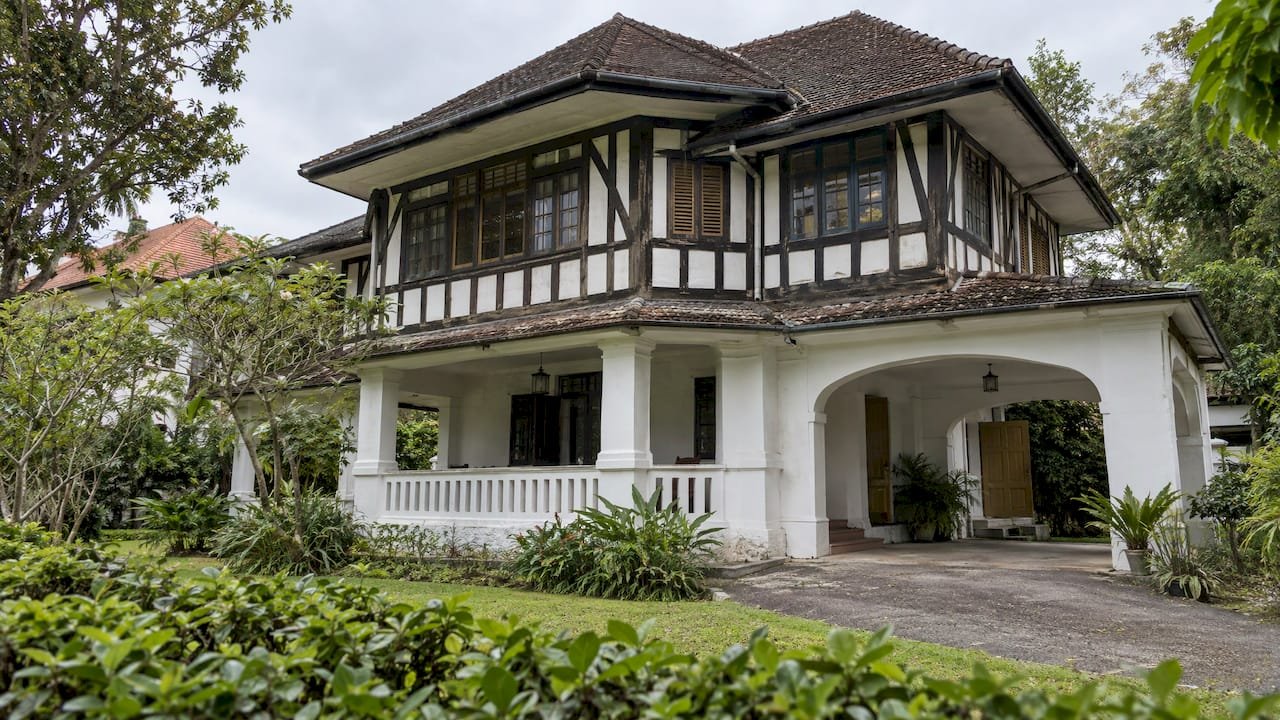
According to the National Heritage Board’s Roots.gov.sg, black-and-white houses are stately colonial residences built between 1903 and 1941, typically occupied by the well-heeled. The name comes from the dark timber beams and whitewashed walls. The Singapore Land Authority describes the look as a mix of local Malay and mock-Tudor features: overhanging hipped roofs, half-timber construction, and a second-storey verandah above a carriage porch.
The Urban Redevelopment Authority (URA), which sets planning and conservation rules, says these bungalows were built in the 1900s to 1950s and given conservation status from 1991 onwards. They are generally standalone two-storey houses with verandahs along the front and sides, set in large grounds. The first occupants were the highest-ranking colonial officers, followed later by wealthy local merchants.
Roots.gov.sg credits architect Regent Alfred John Bidwell of Swan & Maclaren with setting the pattern. His 1903 design for the W. Patchitt House at Cluny Road combined a half-timbered upper storey with a masonry ground floor. The era ended with the Second World War. The last chapter was the military black-and-white style seen in Alexandra, Changi, Seletar and Sembawang.
Why the style matters when you choose a home
The features that make these houses attractive are the same ones that shape daily life. High ceilings, deep verandahs and large gardens give a sense of space that few Singapore homes offer. The same age and heritage status mean repairs and changes are more controlled than in a modern house. Keep both sides in mind before reading about any specific estate.
Where the black-and-white houses are
The Business Times lists the main clusters by region (Black-and-white houses: A Singaporean architectural legacy, May 2023):
| Region | Estates |
|---|---|
| North | Sembawang, Seletar |
| South and central | Mount Pleasant, Alexandra Park, Mount Faber, Gillman Barracks, Adam Park, Ridley Park, Goodwood Hill, Chancery Lane, Dempsey |
| West | Nepal Hill, Rochester Park, Portsdown, Fifth Avenue |
| East | Changi |
The same report says the SLA manages about 500 of them, many treated as conservation properties since 1991.
A few estates have a clear identity. According to Expat Living Singapore:
- Goodwood Hill: its bungalows were built by the Public Works Department in 1910 and are among the oldest.
- Adam Park: 19 houses from the late 1920s, which also served as a prisoner-of-war camp.
- Wessex Estate: about 70 semi-detached houses and walk-up apartments from the 1930s and 1940s.
- Rochester Park: around 40 bungalows.
- Seletar Camp: the largest count, with around 200 bungalows still standing.
Which estate suits which household
Families who want gardens and space for children often look at the western and central pockets such as Rochester Park or Dempsey. The Business Times notes that black-and-white houses are popular with expats hoping to recreate country living with room for children, and that terrace-style black-and-whites appeal to locals because smaller built-up areas and plots mean lower rents than standalone houses. The northern estates of Sembawang and Seletar have the largest numbers, which can mean more choice but a longer trip to the city centre. Check the commute, the school catchment you care about and the condition of the specific house, not only the estate name.
Black-and-white houses and Good Class Bungalows are not the same
This is the most common mix-up behind searches for “black and white houses” and “GCB”.
A Good Class Bungalow is a planning category. URA’s development control handbook lists 39 Good Class Bungalow Areas, including Belmont Park, Cornwall Gardens, Leedon Park, Dalvey Estate, Nassim Road, Ewart Park, Oei Tiong Ham Park, Queen Astrid Park, Bukit Tunggal, Ridley Park, Chatsworth Park and Ridout Park. Their locations are shown on URA’s Designated Landed Housing Area Plan. The detailed rules (a minimum site of 1,400 sqm, two storeys plus attic and basement, limits on how much of the plot can be built on) are set by URA, and ownership of GCB land is restricted, so confirm eligibility with URA before any commitment.
A black-and-white house is defined by age and architecture, not by plot size or zone. Some sit inside areas that also contain GCBs, which is why names like Ridley Park and Ridout Road appear in both conversations. But most black-and-white houses are state property let on tenancies, while GCBs are privately owned homes bought and sold on the open market.
Minister for Law K Shanmugam made a related point in Parliament in 2022: it would be unwise to compare black-and-white bungalow rents with private GCB rents across different periods, because rents depend on market timing and the state of the property. Early-1900s houses lack the modern fittings of a newer GCB, so tenants often spend on air-conditioning, carpentry and kitchen and bathroom upgrades.
| Black-and-white house | Good Class Bungalow | |
|---|---|---|
| Defined by | Age, architecture and conservation | URA’s gazetted areas and plot rules |
| Typical ownership | Largely state-owned, let on tenancies | Privately owned, restricted ownership |
| How you get one | Tender or agent-managed rental | Purchase on the open market |
| Condition | Historic fabric, controlled alterations | Modern build or rebuild |
How renting a black-and-white house works
CNA’s explainer on renting a black-and-white house sets out the process. SLA-managed properties are generally let through open tender, while agent-managed ones can be rented directly. State residential tenancies run up to three years.
Applicants must meet these conditions:
- Be at least 21 years old.
- Not be debarred by the government.
- Not be a current or former tenant of SLA-managed state property.
- Owe no money to the government.
- Have income of at least three times the offered rent, or be assessed by SLA as being of sound financial status.
The Ministry of Law’s written answer says SLA managed 262 residential state black-and-white bungalows above 20,000 sqft of land. As of 21 July 2022, 236 were tenanted, with a median land size of about 38,000 sqft and a median rent of about S$13,000 a month, typically on two or three-year terms. Larger bungalows tended to have lower rents per square foot and lower occupancy than smaller ones. CNA adds that some rents exceeded S$30,000 a month.
These are published figures for July 2022. Tender results change with each round, so treat them as a sense of scale rather than a quote, and read the current tender documents on SLA’s property portal for the house you want.
What the tender asks of you
A tender is a sealed bid. You decide your monthly offer before you see the other bids, which is why a clear view of what comparable landed homes rent for matters. Our free property valuation gives you a reference point for a landed property, so your offer rests on a figure and not on a feeling.
The costs beyond the monthly rent
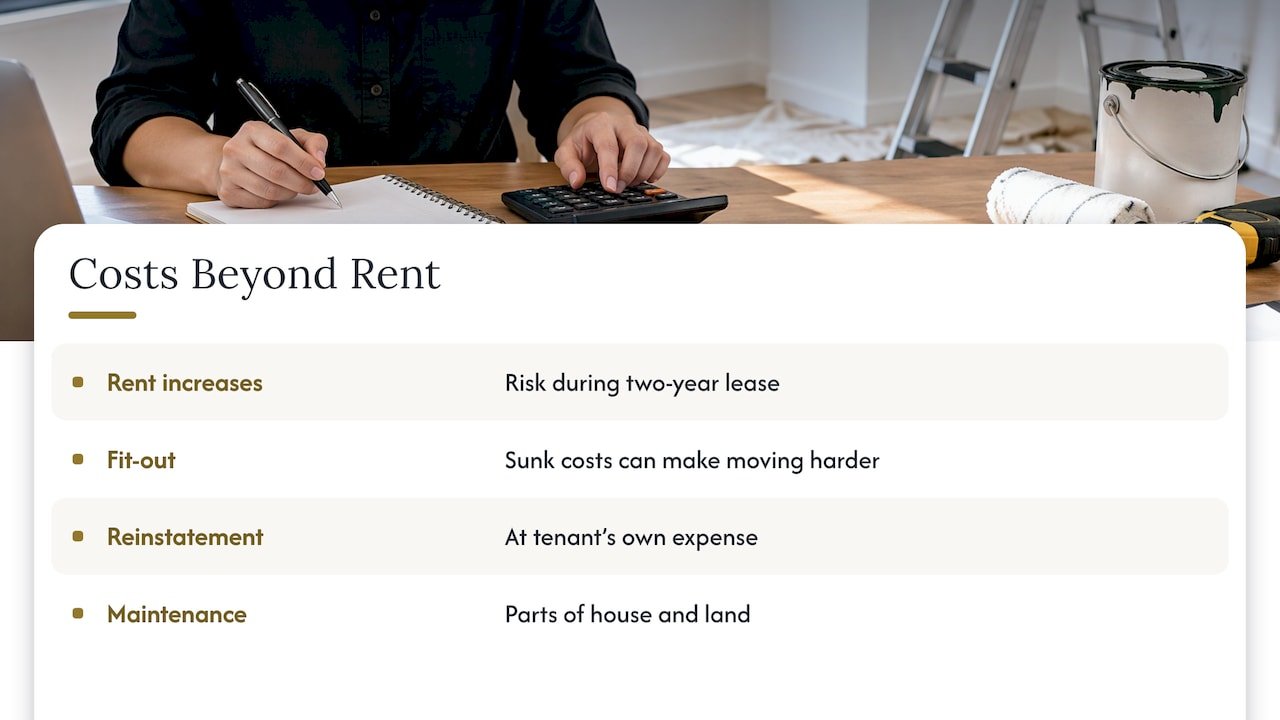
The rent is only part of what you commit to. The Business Times warns that a two-year lease brings the risk of rent increases, that sunk fit-out costs make moving harder, that tenants must pay to reinstate the property at the end, and that many leases make tenants responsible for maintaining parts of the house and land.
CNA reports that, according to sample tenancy agreements, tenants must hand over the property in a good state of repair at their own expense. They must also demolish and remove any approved works, including new structures, if notified to do so.
Alterations need written approval. Because the houses are conserved, any additional or alteration work requires approval from SLA and other authorities, supported by professional plans, drawings and calculations. Budget for the approvals process as well as the works.
A published case shows the scale. In March 2025 Uchify reported on 26 Ridout Road, where the Minister for Law’s rent was S$26,500 a month, with S$61,400 for a car porch and S$400,000 for additional works including a pool. SLA separately spent S$515,400 on restoration and structural repairs and S$172,000 on site clearance. That is one high-end house, not a typical one, but it shows how much of the cost of an old bungalow sits outside the rent.
Living with an old house
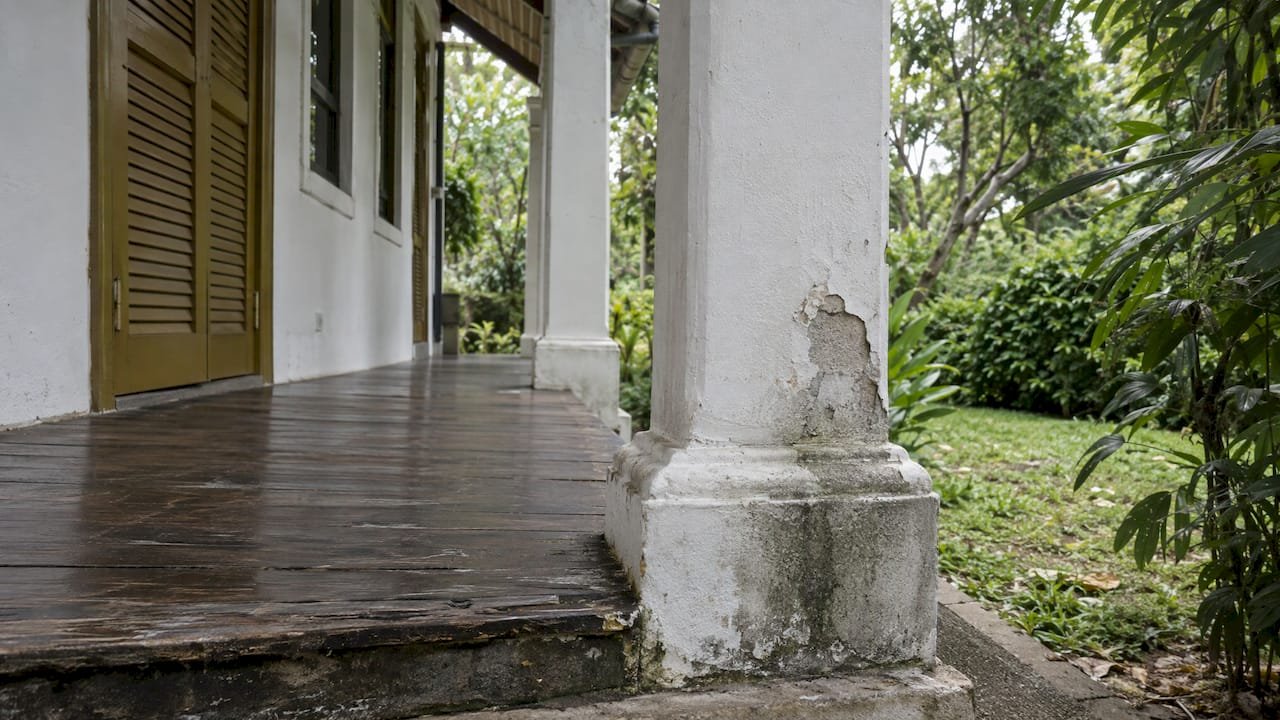
The Business Times also notes that old properties near greenery can have spalling concrete, leaky roofs, sewage pipes choked by tree roots, and visitors such as monitor lizards, bees, bats and wild boars. Century-old bungalows need repainting of facades, restoration of ageing timber and care of large gardens. Families with young children should visit in the rain and walk the whole plot before committing.
Who should consider which route
Families. If your priority is space and a garden near good schools, a black-and-white rental can work for a two or three-year posting or a trial of landed living. If you want a long-term home you own, look at freehold or leasehold landed homes on the open market instead. Our guide to strata landed versus conventional landed homes explains what to check on the title and the plot.
Expats. The tenancy conditions above, including the income test and the reinstatement clause, are the reason to plan early. Our guide to renting in Singapore as an expat covers rules, areas and costs, and we offer rental assistance for expats.
First-time buyers. Black-and-white houses are not a first-purchase route, because most are let and not sold. Understanding landed zoning and what the planning authority allows is still a useful skill. Start with how to read the URA Master Plan before you buy.
Investors and sellers. If you own landed property near a conserved estate, the zoning, plot size and neighbouring heritage rules all affect value. The URA Master Plan shows what is permitted around you, and stamp duty planning should be done before a transaction, not after.
Our view
We see the interest in black-and-white houses as a search for space, character and a green setting, and that need can be met in more than one way.
Renting a state-owned house is a tenancy with its own rules on bidding, upkeep and handing back. Buying landed property is a different decision with different costs. Mixing the two leads to expensive surprises.
Our work is on the Singapore property transaction itself: free property evaluations, personalised negotiation, detailed market analysis that looks for gaps and opportunities, residential and commercial listings, and rental assistance for expats. We help clients invest without the burden of Additional Buyer’s Stamp Duty (ABSD), which makes property investment more affordable.
Whatever you choose, start from the numbers: what the property is worth, what the rules allow and what you will pay in total.
Anderson
Take the next step with Register Today
If the real goal is a landed home or a rental that fits your family, we can help you compare options with real figures. Our team has over $1 billion in sales behind it. We offer a free valuation, personalised negotiation and listings across residential and commercial property, and we help expats find rentals.
Begin with a free property valuation, browse residential listings, or tell us what you want to buy or rent.
Checks before you commit to a landed home
Whether you rent an old bungalow or buy landed property, these checks apply:
- Confirm the category. Is the house conserved, in a GCB area, or neither? URA’s published lists and plans answer this, and the answer sets what you can change.
- Read the tenancy or title terms. For a rental, check the lease length, the maintenance split and the reinstatement clause. For a purchase, check tenure and plot size.
- Cost the whole commitment. Add fit-out, approvals, upkeep and the end-of-lease obligations to the monthly rent.
- Walk the site. Look for damp, roof leaks, drainage and tree roots, and ask how the garden is maintained.
- Know your stamp duty position before you buy. ABSD depends on who you are and what you already own, so plan it in advance. Our guide to zoning checks to avoid ABSD surprises shows how this works for commercial property.
- Check the wider market. Our market outlook for Singapore property sets out scenarios and a buyer checklist.
FAQ
Are black-and-white houses popular?
Yes, particularly with expats and families who want space and greenery. The Business Times reports that expats like them for country-style living with room for children, and that terrace-style houses appeal to locals because their smaller plots bring lower rents. Demand varies by house size, and larger bungalows have tended to have lower occupancy.
What is a GCB in Singapore?
A Good Class Bungalow is a landed house in one of 39 areas gazetted by URA. The minimum plot is 1,400 sqm, and ownership is restricted, so check eligibility with URA first. It is a planning category and is separate from the black-and-white style.
Can I buy a black-and-white house?
Most of the ones managed by SLA are let on tenancies and are not sold. Rental is by open tender for SLA properties, or directly for agent-managed ones. If you want to own landed property, look at the open market instead.
Why is Nassim Road so expensive?
Nassim Road is one of URA’s 39 gazetted Good Class Bungalow Areas, where plots must be at least 1,400 sqm and are in fixed supply. Prices there reflect that scarcity and the central location. For a figure on any specific property, a valuation based on recent comparable transactions is the right tool.
Sources
- Black and White Houses in Singapore, Roots.gov.sg (National Heritage Board)
- Understanding the Bungalow, Urban Redevelopment Authority
- Locational Criteria for Bungalows, Urban Redevelopment Authority
- Black-and-white houses: A Singaporean architectural legacy, The Business Times
- Where are the Black and White Houses in Singapore?, Expat Living Singapore
- CNA Explains: Renting a black-and-white house in Singapore
- Written Answer by Minister for Law K Shanmugam, Ministry of Law, 2 August 2022
- Here’s What It Costs to Live Like K. Shanmugam In An SLA Bungalow, Uchify