
Tenant Rights in Singapore: Prepare an SCT Claim Up to S$20,000
In Singapore, your tenancy rights come mainly from your signed tenancy agreement, supported by common law principles and, for HDB flats, specific subletting rules. The Small Claims Tribunal handles most disputes up to S$20,000. Stamp your agreement with IRAS, build a photo inventory, and keep every receipt: these three steps settle most disputes before they start.
TL;DR:
- Because Singapore has no national Tenancy Act, treat CEA templates as starting points and negotiate deposit, notice, repair caps, and any diplomatic clause.
- The Small Claims Tribunal hears residential tenancy disputes for agreements of up to two years, usually up to S$20,000, or S$30,000 by written agreement.
- Landlords generally cover major repairs not caused by misuse; tenants may pay minor repairs under an agreed cap, often S$150 to S$250 per incident.
- A landlord’s deposit deductions should cover damage beyond fair wear and tear and come with itemized invoices or quotations, not a verbal assessment.
- HDB tenants must check current approval, eligibility, registration, and minimum tenancy rules; private rentals depend more heavily on negotiated agreement terms and common law.
Table of Contents
- Tenancy agreement essentials: what to check before you sign
- Security deposit: standard amounts and how to secure a full refund
- Repairs and habitability: who pays and how to document defects
- Landlord entry and your right to quiet enjoyment
- Eviction and unlawful eviction: what landlords cannot do
- How the Small Claims Tribunal handles tenancy disputes
- HDB versus private tenancy: why the rules differ
- Move-in and move-out checklist to protect your deposit
- Common tenant mistakes we see in the Singapore market
- Finding a properly listed rental through Register Today
- FAQ
- Sources
- Authoritative resources for your next steps
Tenancy agreement essentials: what to check before you sign
Singapore has no single national Tenancy Act. Unlike jurisdictions with statutory rental codes, your protections here come from what is written into the tenancy agreement itself, interpreted alongside common law and, for public housing, HDB’s own rules. This makes the document you sign the single most important piece of paper in your tenancy.
The Council for Estate Agencies publishes standard tenancy agreement templates for both HDB and private residential lettings, but these are guidelines rather than fixed law. Both parties remain free to negotiate and amend clauses, including adding a diplomatic clause for expatriate tenants who may need to leave early.
Before signing, check these clauses carefully:
- Deposit amount and the timeline for its refund after move-out
- Notice period required from either party to end or renew the tenancy
- Repair cost caps and which party pays for what
- Who covers utilities, conservancy charges and any service fees
- Inventory list and joint inspection arrangements at handover
- A diplomatic or break clause if you are an expatriate tenant
Stamping the agreement with IRAS can help document the tenancy. The Small Claims Tribunal filing guidance lists the tenancy agreement and stamp certification among the documents to upload. Our tenancy agreement guide walks through the CEA and HDB templates and the stamping steps in more detail. The tenancy agreement usually names which party arranges and pays for stamping, so confirm this before you hand over any money.
Pro Tip: Never pay a deposit against an unstamped agreement. Ask for the stamp certificate before you transfer any funds.
Security deposit: standard amounts and how to secure a full refund
Deposit conventions vary between private and HDB tenancies, but the figure that matters most is whatever is written into your tenancy agreement. Get it recorded precisely, including the currency, the refund date and any conditions attached to it.
Deductions from your deposit must be backed by itemised invoices or quotations, and they should only cover damage beyond fair wear and tear. A landlord cannot simply withhold part of the deposit on the basis of a verbal assessment.
To protect yourself:
- Request receipts and formal quotations for any proposed deduction
- Compare deductions against your move-in inventory and photos
- Ask for a written refund timeline in the tenancy agreement itself
- Escalate with a Letter of Demand if the landlord delays beyond the agreed date
If a landlord stalls past the agreed refund period, a written Letter of Demand is usually the next step, followed by mediation, then the Small Claims Tribunal if necessary. Our deposit recovery guide sets out the escalation sequence in full, and our letter of intent checklist covers what to confirm before you even pay the deposit.
Repairs and habitability: who pays and how to document defects
Landlords are generally responsible for keeping the property habitable and for major repairs that are not caused by tenant misuse. Tenants typically handle agreed minor repairs where the tenancy agreement sets a monetary cap.
- Check whether your agreement specifies a minor repair threshold, often somewhere in the S$150 to S$250 range per incident in market practice.
- Confirm who arranges and pays for repairs above that cap, usually the landlord.
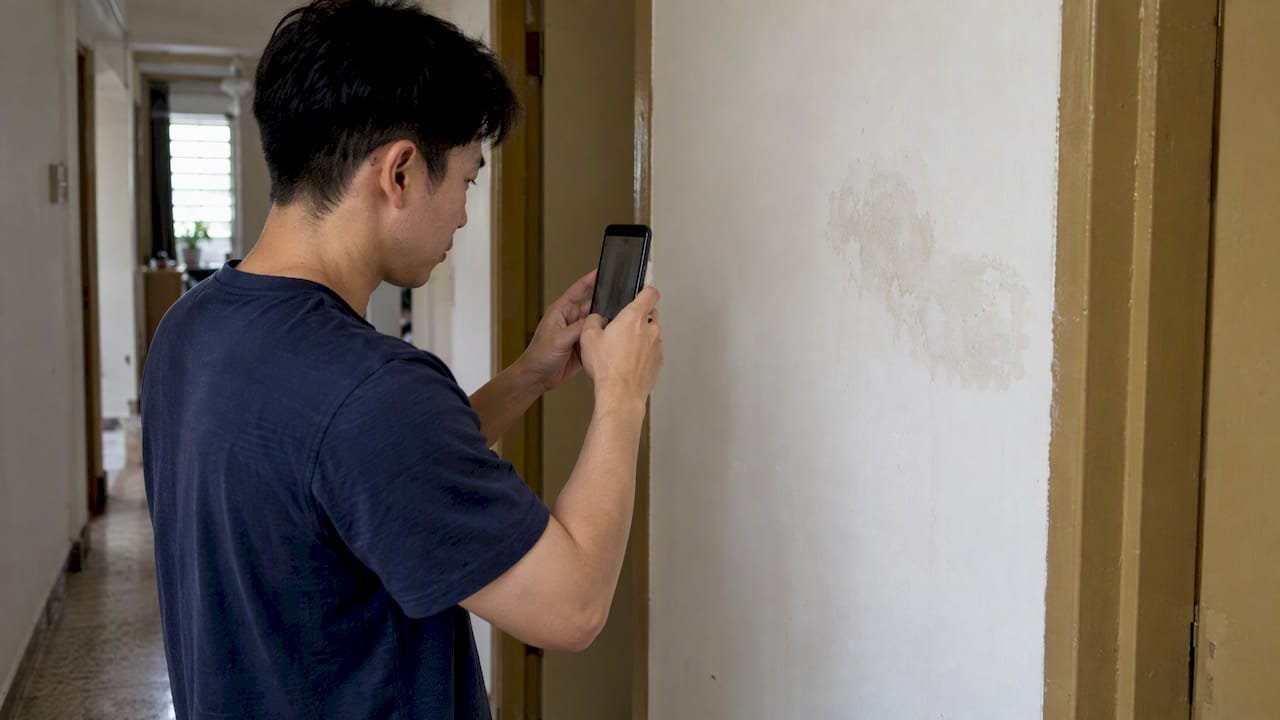
- Photograph every defect with a visible date stamp as soon as you notice it.
- Keep every repair invoice and quotation in one folder, digital or physical.
Specifying a clear monetary threshold in the agreement avoids arguments later about whether a fix counts as “minor”. The defects liability period that applies to newly built or renovated units can also give you up to 12 months to claim free rectification of certain construction defects, which is worth checking if your unit was recently completed.
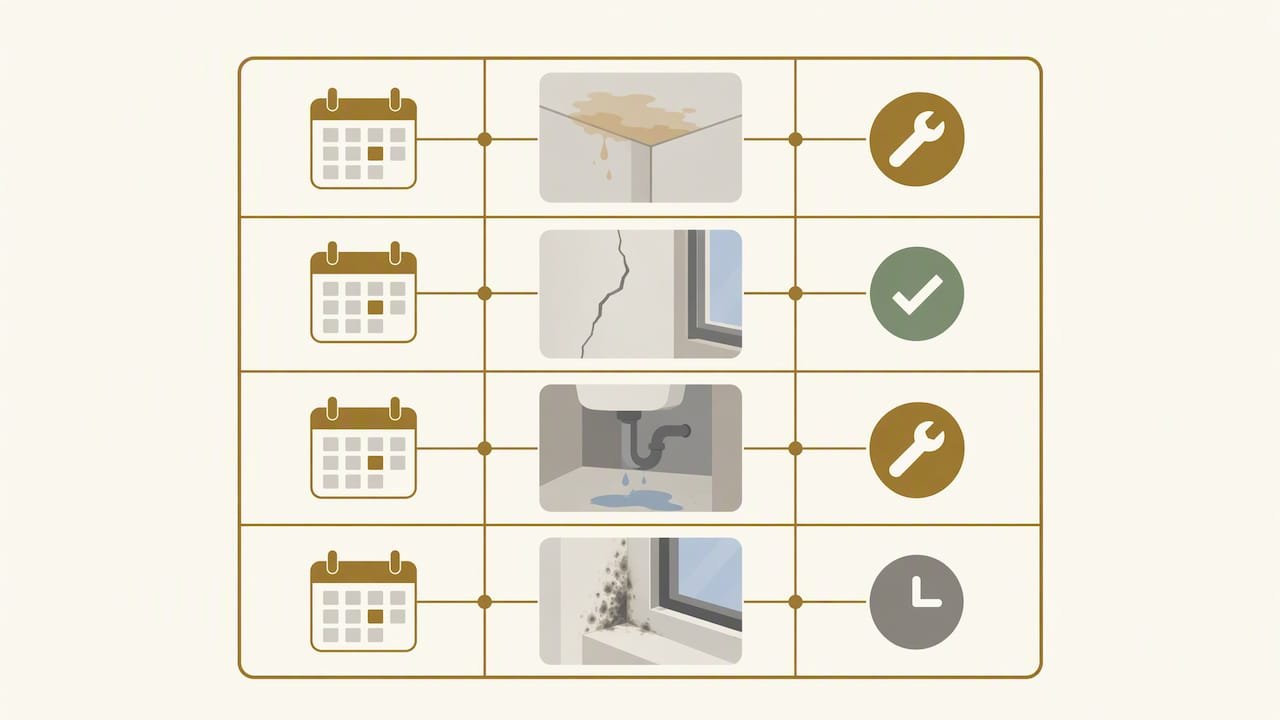
Pro Tip: Build a simple defects schedule: one row per issue, with date, photo reference and repair status. It becomes your strongest evidence if a dispute ever reaches the tribunal.
Landlord entry and your right to quiet enjoyment
Quiet enjoyment is the principle that protects you from your landlord turning up unannounced. Landlords do not have an automatic right of entry once you have moved in, and HDB tenancies typically expect at least 24 hours’ notice before any non-emergency visit, a standard many private leases also follow.
Genuine emergencies, such as a fire, gas leak or flood, are recognised exceptions where a landlord may enter without prior notice. Outside those situations, insist on written notice and a reasonable visiting time written into your tenancy agreement.
If a landlord enters without notice or permission:
- Take time-stamped photos of the entry or any disturbance
- Send a written complaint referencing the quiet enjoyment clause
- Raise mediation if the behaviour continues
- Consider a Small Claims Tribunal claim for repeated breaches
Eviction and unlawful eviction: what landlords cannot do
A landlord cannot simply decide a tenancy is over and force you out. Check the applicable legal process and seek advice if you face eviction.
Changing the locks, removing your belongings or cutting off utilities to pressure you into leaving may be unlawful. Seek legal advice about your situation.
- Seek prompt legal advice if you are locked out or utilities are cut
- Photograph the property’s condition and any damage before you touch anything
- Preserve all correspondence showing the landlord’s intentions
- Check whether the Small Claims Tribunal can hear your claim and what orders may be available
An SCT order carries the same force as a court judgment, which means a landlord who ignores one faces enforcement action, not just an awkward conversation. Where your agreement includes a break or diplomatic clause, follow its stated process and seek advice if you are unsure how it applies.
How the Small Claims Tribunal handles tenancy disputes
The Small Claims Tribunal is the practical route for most tenancy disagreements, and it was built to be accessible without a lawyer. Claims involving residential tenancies of up to two years can be brought before the tribunal, which normally caps claims at S$20,000, extendable to S$30,000 if both parties agree in writing.
Lawyers are not permitted to represent either party at hearings, which keeps the process informal but also means your paperwork has to do the talking. The guide to small claims lists exactly what to prepare: your stamped tenancy agreement, receipts, photographs, written correspondence and a defects schedule if repairs are in dispute.
Filing follows a straightforward sequence:
- Register and log in to the Community Justice and Tribunals System (CJTS) online.
- Complete the claim form, naming the respondent and the amount claimed.
- Upload your evidence bundle, including the stamped agreement and supporting documents.
- Attend the mandatory pre-hearing consultation, where many disputes settle.
- Proceed to a hearing if no settlement is reached, and await the tribunal’s order.
| What the SCT can order | Typical use |
|---|---|
| Payment order | Return of withheld deposit or unpaid refund |
| Work order | Landlord to carry out agreed repairs |
| Order for delivery of vacant possession | Tenant to vacate by a set date |
The tribunal can also issue orders tied to incomplete renovation or repair works, as outlined in the CJTS filing guidance. An order that goes unpaid can be enforced through further court processes, giving the tribunal’s decision real teeth.
HDB versus private tenancy: why the rules differ
HDB and private residential tenancies can involve different requirements. Check current HDB guidance for approval, tenant eligibility and registration requirements before subletting an HDB flat.
- Check HDB guidance for any minimum tenancy period that applies
- Private tenancies rely more heavily on whatever the tenancy agreement specifies
- Check the agreement and applicable HDB guidance for deposit and move-out inspection arrangements
- Non-compliance with HDB subletting rules can affect both landlord and tenant
| Aspect | HDB tenancy | Private tenancy |
|---|---|---|
| Approval needed | Check current HDB requirements | Check whether any approval requirement applies to your situation |
| Governing basis | HDB subletting rules | Tenancy agreement and common law |
| Dispute route | Small Claims Tribunal | Small Claims Tribunal |
Knowing which regime applies to your flat determines which checklist, approval and notice period you actually need to follow.
Move-in and move-out checklist to protect your deposit
A little discipline at the start and end of your tenancy can help reduce deposit disputes.
- Before move-in: confirm the tenancy agreement is signed and stamped with IRAS, and request the stamp certificate.
- Take dated photos of every room, fixture and existing defect, ideally with the landlord or agent present.
- Request a receipt for the deposit and any other upfront payment.
- During the tenancy: keep every repair invoice and a written record of any communication with your landlord.
- On move-out: request a joint inspection and attend it in person.
- Take time-stamped photos and video of the unit’s condition as you leave.
- Obtain itemised invoices for any repairs the landlord deducts for.
- Send a Letter of Demand before considering a Small Claims Tribunal filing.
Pro Tip: Store every photo and receipt in one cloud folder named by address and date. A tidy evidence bundle makes it easier to present your documents if a dispute arises.
Common tenant mistakes we see in the Singapore market
The same mistakes recur across most of the tenancy disputes we come across. Tenants sign unstamped agreements, skip the move-in inventory, or leave repair responsibilities vague in the hope that goodwill will cover the gap.
A practical approach is to use a CEA or HDB template as a starting point, confirm stamping arrangements, and keep digital copies of photos and receipts. These records may help if a dispute arises.
— Anderson
Finding a properly listed rental through Register Today

Once you understand your rights, finding the right property matters just as much as protecting yourself within it. We list residential rentals across Singapore and offer property evaluations to help you find a rental.
- We help you locate residential rentals
- We offer personalized guidance as you consider a rental
- We can help you consider the requirements that apply to your rental
- Our free property valuation helps you judge whether an asking rent is reasonable
When you are ready to start your search, browse current listings and tenancy resources on Register Today and connect with an agent who can talk you through the details before you commit.
FAQ
Where can I complain about a landlord in Singapore?
Start with a written Letter of Demand to the landlord, then move to mediation if the issue is not resolved. If that fails, you can file a claim with the Small Claims Tribunal for residential tenancy disputes.
Can a landlord evict a tenant without a court order in Singapore?
Generally no. Lawful eviction requires a court or tribunal order, and a landlord who removes your belongings, changes the locks or cuts utilities to force you out without one is acting unlawfully.
Can a landlord evict a tenant without notice?
A landlord cannot force you out without notice or due process. Any notice period and termination procedure should follow what is written in your stamped tenancy agreement, and bypassing it can amount to unlawful eviction.
How can a landlord take action legally against tenants?
A landlord pursuing a legitimate claim, such as unpaid rent or property damage, generally needs to go through the Small Claims Tribunal or the courts rather than take matters into their own hands. The tribunal can issue payment orders, work orders or an order for vacant possession where justified.
Sources
- Judiciary
- Renting or renting out | Council for Estate Agencies
- Tenant Rights Singapore: Deposit, Repairs, Eviction Protection
- A GUIDE TO SMALL CLAIMS
Authoritative resources for your next steps
A handful of official pages cover almost everything a tenant needs when taking formal action.
- The Small Claims Tribunal filing portal explains jurisdiction limits and how to start a claim.
- The guide to small claims lists exactly which documents to prepare before filing.
- The CJTS online filing guide walks through the digital filing steps and forms.
- CEA’s tenancy agreement and checklist resources provide templates for both HDB and private residential lettings.
- CEA’s agreements and checklists page hosts prescribed forms used across the leasing process.
- The Small Claims Tribunals Act sets out the tribunal’s statutory powers, including the types of orders it can issue.
Keep these bookmarked alongside your own evidence folder. Between a stamped agreement, a documented inventory and these official references, most tenants in Singapore are well placed to resolve a dispute without it ever escalating beyond a Letter of Demand.


