Foreigner Condo vs Landed in Singapore: What You Can Buy
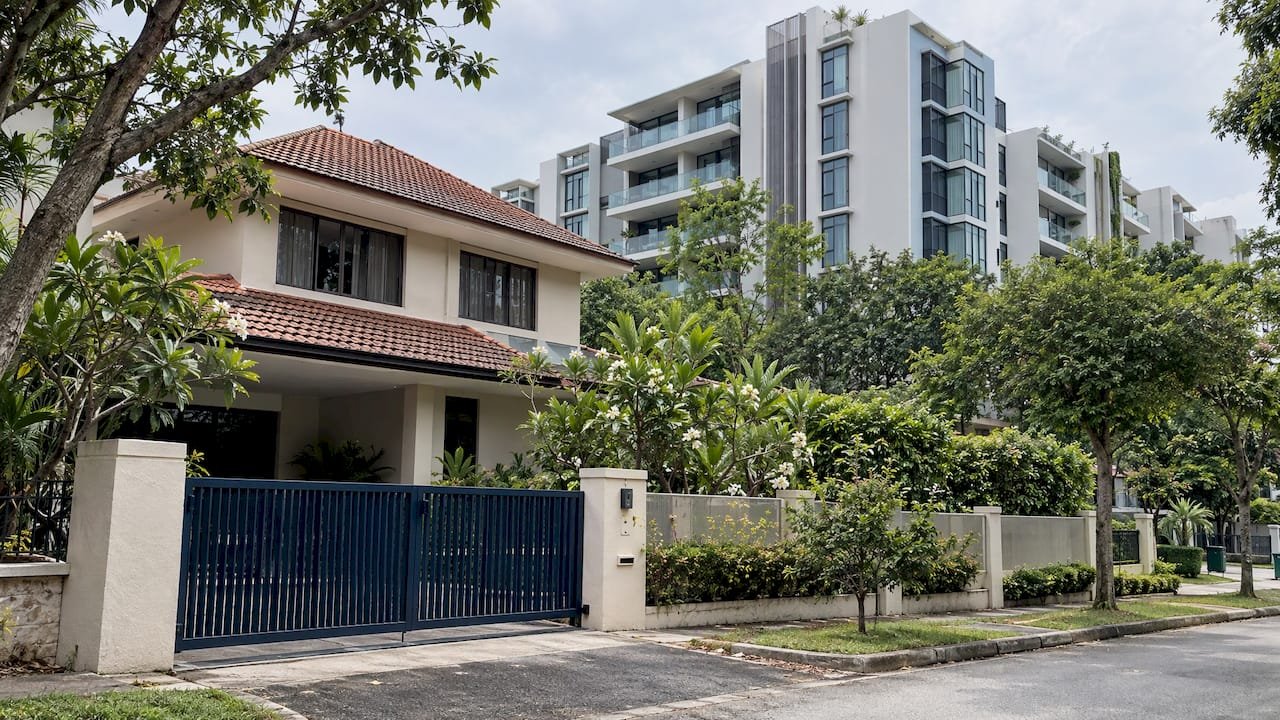
A foreigner can buy a private condominium in Singapore without government approval. A foreigner cannot simply buy a landed house: terrace, semi-detached and bungalow homes are restricted and need approval, which is granted only in limited cases. The one landed exception is a strata-landed house inside an approved condominium development. This guide sets out what the rules allow, what each option costs and how living in a condo differs from living in a landed home.
TL;DR
- Condos, flats in approved condominium developments and strata-landed homes in approved condominium developments can be bought by foreigners without prior approval, according to the Singapore Land Authority (SLA).
- Terrace, semi-detached and detached houses, vacant residential land and landed homes in Sentosa Cove need SLA approval, assessed case by case.
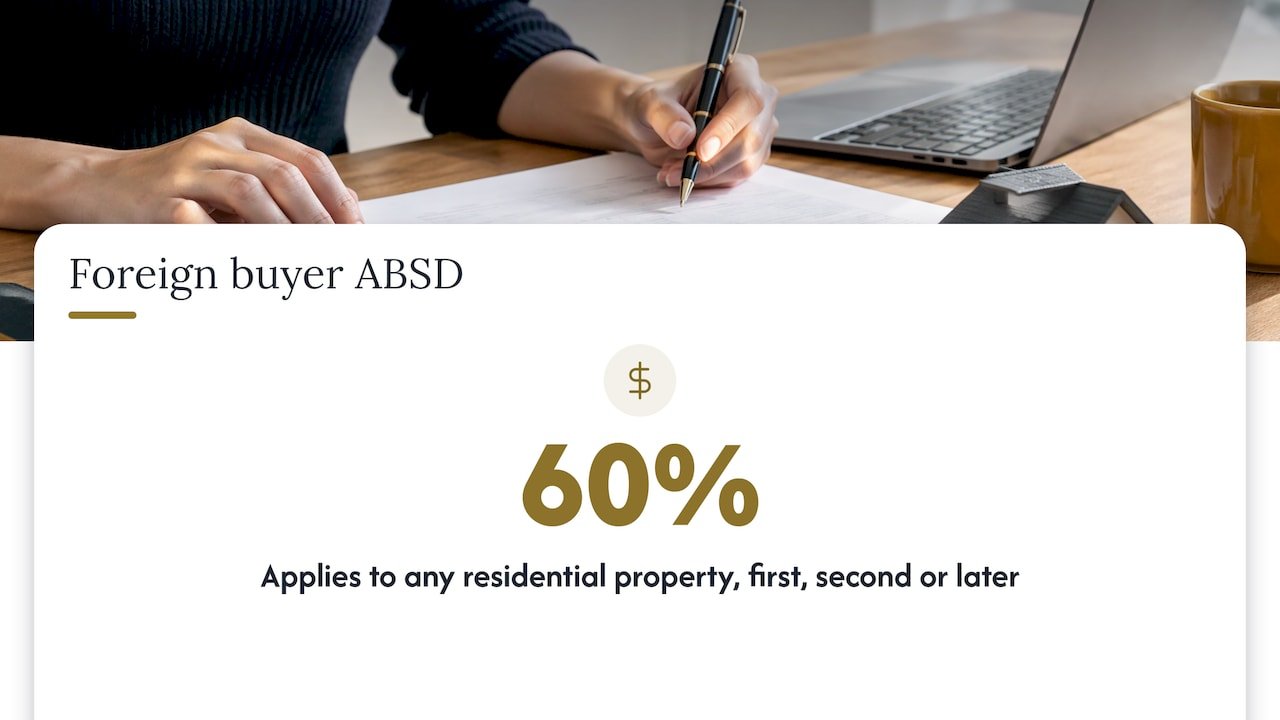
- Foreign buyers pay Additional Buyer’s Stamp Duty (ABSD) of 60% on residential property, on top of Buyer’s Stamp Duty.
- Approved restricted-property buyers cannot rent the home out, so landed is a home to live in, not a rental investment.
- Condos suit most foreign buyers: more choice, easier resale and facilities and security built in.
Table of Contents
- What the law lets foreigners buy
- When a foreigner can get landed property approval
- What a foreign buyer pays: stamp duties
- Condo vs landed: how daily life compares
- How to choose as a foreign buyer
- Our perspective
- Browse and value with Register Today
- FAQ
- Sources
What the law lets foreigners buy
The Residential Property Act sets the rules. The SLA defines a foreign person as anyone who is not a Singapore citizen, Singapore company, Singapore limited liability partnership or Singapore society. A Singapore permanent resident (PR) is therefore still a foreign person for this purpose, although PRs are the group most likely to win approval for landed property.
The SLA’s list of what foreigners may buy splits into two groups.
| Property type | Approval needed? |
|---|---|
| Condominium unit | No |
| Flat unit in an approved condominium development | No |
| Strata-landed house in an approved condominium development | No |
| Terrace, semi-detached or detached house (bungalow) | Yes |
| Vacant residential land | Yes |
| Strata-landed property outside an approved condominium development | Yes |
| Landed residential property in Sentosa Cove | Yes |
The SLA’s list sends buyers to HDB rules for public housing and Executive Condominiums, so check those categories separately. Neither is a free choice for most foreigners. If you are weighing a rental in public housing instead, our guide to HDB rental rules for foreigners covers what is allowed.
The strata-landed exception
A strata-landed house sits inside a condominium development. It looks like a small landed home, often with a private garden or roof terrace, but the title is strata and the development shares facilities and management. This is the only landed-style home most foreigners can buy without approval. The development must be an approved condominium development, so confirm that before you pay an option fee. We explain the differences in more detail in our guide to strata landed versus conventional landed homes.
When a foreigner can get landed property approval
Approval for restricted landed property is not a formality. The SLA assesses applications case by case and generally looks for at least five years of PR status and an exceptional economic contribution, including Singapore-assessable employment income. The Ministry of Law has stated that landed residential property is intended primarily for Singapore citizens, and the approach to foreign ownership is strict.
In practice:
- Apply before you sign. The SLA’s Land Dealings Approval Unit FAQ advises applicants to seek in-principle approval before signing a contract for restricted property. This keeps your option deposit and other money from being at risk before you know whether you are eligible.
- Watch the one-year window. An in-principle approval lapses if the property details are not submitted within one year.
- Do not use a nominee. A Singapore citizen cannot hold restricted residential property on trust for a foreign person. The Ministry of Law says such arrangements may be void and can bring a fine of up to S$100,000, imprisonment of up to three years, or both.
Buyers who also arrange funding across borders may want to read about how non-resident property finance can be slowed by tax and anti-money-laundering checks, and plan paperwork early.
Conditions that come with an approval
Approval carries conditions that matter for a landed purchase. According to the SLA’s FAQ, approved buyers must use the home only as a dwelling for themselves and their family. They may not rent out the property or part of it, may not dispose of it within five years under the stated completion, TOP and CSC rules, and may not subdivide it without written approval. Breaching the conditions is an offence punishable by a fine of up to S$200,000, imprisonment of up to three years, or both.
The point for decision-making: an approved landed home is a long-term family residence. If you want rental income, a condo is the product built for it.
What a foreign buyer pays: stamp duties
The largest single cost difference for foreigners is not condo versus landed. It is the tax on buying any residential property. Foreign buyers pay ABSD at 60% regardless of whether it is a first, second or later property, added to the tiered Buyer’s Stamp Duty (BSD).
A simple illustration, using round numbers: on a S$2,000,000 condo, 60% ABSD alone is S$1,200,000, payable on top of the price and BSD. The same rate applies to any landed home you are approved to buy, which is why restricted landed purchases are rare for non-residents. For a full budget walk-through, read our guide to 60% ABSD for foreign buyers, and for the BSD side see why valuation risk can raise BSD. Payment deadlines are covered in our stamp duty timeline. Rules shift, so see what changed under the 2026 cooling measures before you commit.
Selling later: Seller’s Stamp Duty
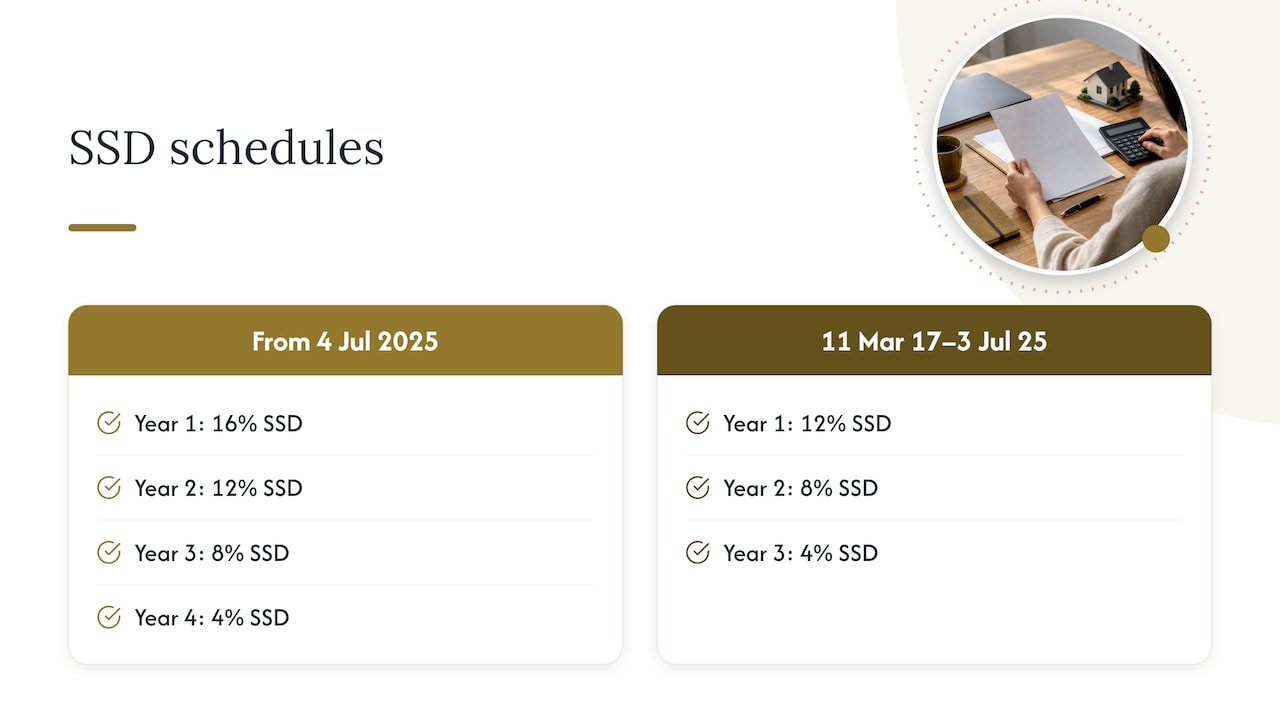
Seller’s Stamp Duty (SSD) applies if you sell too soon. For residential property acquired on or after 4 July 2025, SSD is 16% in year one, 12% in year two, 8% in year three and 4% in year four, with none after four years. Properties acquired from 11 March 2017 to 3 July 2025 stay on the earlier three-year schedule of 12%, 8% and 4%. Our guide on selling a condo in Singapore walks through the steps and costs.
Condo vs landed: how daily life compares
Once you know what you can buy, the lifestyle question is simpler. These are general characteristics of the two property types, not guarantees about any single development.
| Factor | Condo | Landed |
|---|---|---|
| Space | Smaller private area, shared grounds | Larger private lot, private garden, often room to extend |
| Privacy | Shared walls, lifts and corridors | Higher, with your own gate and boundary |
| Upkeep | Management company handles grounds and common areas | You handle the building, garden, pest control and repairs |
| Facilities | Pool, gym, function rooms and similar shared amenities | None unless you build them |
| Security | Gated entry, often guarded | Your own arrangements |
| Purchase price | Lower entry for a given location | Typically higher for the same location |
| Foreigner access | Open, no approval | Restricted, approval needed |
| Rental | Allowed, subject to the development and tenancy rules | Not allowed for approved restricted property |
Space and privacy
Landed homes give a family a private garden, a car porch and no shared walls. Families with young children or elderly members often value this. A condo gives less floor area for the price, but sharing a pool, playground and gym means a family may not need to pay for those separately.
Maintenance and cost of ownership
A condo owner pays a monthly maintenance fee, which funds the management of lifts, pools, security and landscaping. A landed owner pays no such fee but carries the building costs directly: roofing, drainage, painting, garden care and any renovation. Neither is cheaper in every case. The right comparison is the monthly fee versus your own estimate of upkeep over ten years.
Security and convenience
Gated condos have controlled access and resident-only facilities. This suits professionals who travel often and want to lock up and leave. Landed living needs more planning when you are away for long stretches.
How to choose as a foreign buyer
Start from eligibility, then work through your purpose.
- You are not a PR and want to live in the home: a condo, or a strata-landed home inside an approved condominium development, is the realistic route.
- You are a PR with at least five years’ status and strong Singapore income: landed approval is possible but not certain. Apply for in-principle approval before you sign anything.
- You want rental income: choose a condo. Check the development’s rules and the current tenancy rules before you buy. Our guide to renting as an expat shows what tenants look for, and the short-term rental rules explain what is not allowed.
- You are an investor weighing a second property: read our breakdown of second property costs and sequencing and run the rent versus buy model over your holding period.
- You are buying for business use: commercial property follows different rules, and zoning checks matter.
To find a fair price, our guide to screening undervalued properties shows how to compare asking prices against URA and HDB data.
Our perspective
Most foreign buyers who ask us about condo versus landed are really asking two questions at once: what am I allowed to buy, and what will it cost me in tax? The first is settled by the Residential Property Act and the SLA’s published list. The second is settled before any viewing, so we start there.
At Register Today we focus on Singapore transactions where the structure and the numbers matter, including Additional Buyer’s Stamp Duty. Our approach is to run a detailed market evaluation first, so that a client knows where the pricing gaps and opportunities are before negotiating. We then negotiate on the client’s behalf and keep the process transparent.
For most foreign clients, a well-chosen condo gives the strongest combination of eligibility, flexibility and resale. For clients who want space, a strata-landed home inside an approved condominium development can deliver much of the landed experience without the approval hurdle. We encourage every buyer to confirm eligibility first, then set the budget around the full cost, not the headline price.
Anderson
Browse and value with Register Today
We list residential and commercial properties across Singapore and can help you buy, sell or rent. Start with our residential listings or apartments, or tell us your budget and we will shortlist options that fit your eligibility.
If you already own in Singapore, our free property valuation gives you a view of your property’s market position at no cost. For other needs, visit Register Today.
FAQ
Can a foreigner buy a landed house in Singapore?
Generally not without approval. Terrace, semi-detached and detached houses need SLA approval under the Residential Property Act, and applications are assessed case by case. The exception is a strata-landed house in an approved condominium development, which needs no prior approval.
Can a foreigner buy a condo in Singapore?
Yes. The SLA says foreigners may buy condominium units without prior approval. You still pay Buyer’s Stamp Duty and ABSD at 60%, so budget for the tax before choosing a unit.
Can I buy landed property in Sentosa Cove as a foreigner?
Landed residential property in Sentosa Cove requires approval, like other restricted landed property. Condominium units are a different category and follow the condo rules. Check the SLA’s list before you pay any deposit.
Can I rent out a landed home I have been approved to buy?
No. The SLA’s conditions require the home to be used as a dwelling for you and your family, and renting out all or part of it is not permitted. A breach is an offence with a fine of up to S$200,000, imprisonment of up to three years, or both.
Sources
- Foreign ownership of property, Singapore Land Authority
- SLA Land Dealings Approval Unit FAQ
- Written Answer by Minister for Law on foreigners purchasing restricted residential properties, Ministry of Law
- Buyer’s Stamp Duty and ABSD rates, Yuen Law
- Guide to Seller’s Stamp Duty, Yuen Law
- Non-resident property finance