
Home Staging in Singapore: Microstage HDBs, Label Virtual Photos
Staging pays off for most Singapore sellers and landlords, but the type matters more than the spend: a vacant condo often benefits from virtual staging, while an occupied HDB flat usually gains more from targeted microstaging than a full furniture hire. Before anything else, declutter, fix visible repairs and book professional photography, or request a free valuation to see whether staging is worth the outlay for your unit.
TL;DR:
- Physical staging suits vacant new launches and landed homes; virtual staging costs less per image but must be clearly labeled in every advertisement.
- Staging pays off most readily when local inventory is low, listings look alike, buyers compare similar prices, or tenants are the target.
- Book natural light photography between 9:30 AM and 11:30 AM to avoid backlit balcony shots that silhouette and obscure the interior.
- Label virtual or AI generated photos clearly, never change permanent features, and include the agent’s registered name, registration number, and agency licence number.
- Before hiring a stager, require an itemized quote covering the inventory list, photography package, delivery and pickup dates, and whether damage insurance is included.
Table of Contents
- What staging means, and why it differs from interior design
- Physical staging, virtual staging or microstaging: which one fits your unit
- Room-by-room staging checklist before photos and viewings
- Costs and ROI: what staging actually costs in Singapore and how to judge it
- Compliance: CEA and URA rules that apply to staged and virtual images
- Hiring a stager versus doing it yourself
- How staging fits into a market-ready sale or rental plan
- Get a free valuation before you spend on staging
- FAQ
- Sources
What staging means, and why it differs from interior design
Staging is marketing, not decorating. It means presenting a property so a buyer or tenant can picture themselves living there within the few minutes they spend walking through it or scrolling past the listing photos. Interior design, by contrast, is a long-term investment in how a home looks and functions for the people who already live there.
The distinction matters in Singapore because most viewings are short and most listings are seen online first. A cluttered study or a dark hallway photo can cost a viewing before a buyer ever steps inside.
Local research on showflat behaviour backs this up: buyers form strong first impressions quickly, and purchase decisions often involve family discussions that stretch over several weeks after the first visit, according to research on Singapore buyer behaviour. Staging has to do two jobs at once:
- Create an emotional anchor strong enough to survive that family conversation.
- Present the space honestly enough that it still matches expectations at the second viewing.
That second point is why staging in Singapore has to stay closer to reality than a glossy furniture catalogue. A home that looks nothing like its photos at viewing number two loses trust fast, whether the seller is working with an agent or doing it alone.
Physical staging, virtual staging or microstaging: which one fits your unit
Three approaches cover almost every Singapore property, and the right one depends on whether the unit is occupied, how much budget you have, and where you plan to list.
- Physical staging involves hiring furniture, soft furnishings and styling pieces, then arranging them with lighting adjustments for photography and viewings. It works best for vacant units, new launches and landed homes where empty rooms photograph poorly and feel cold in person.
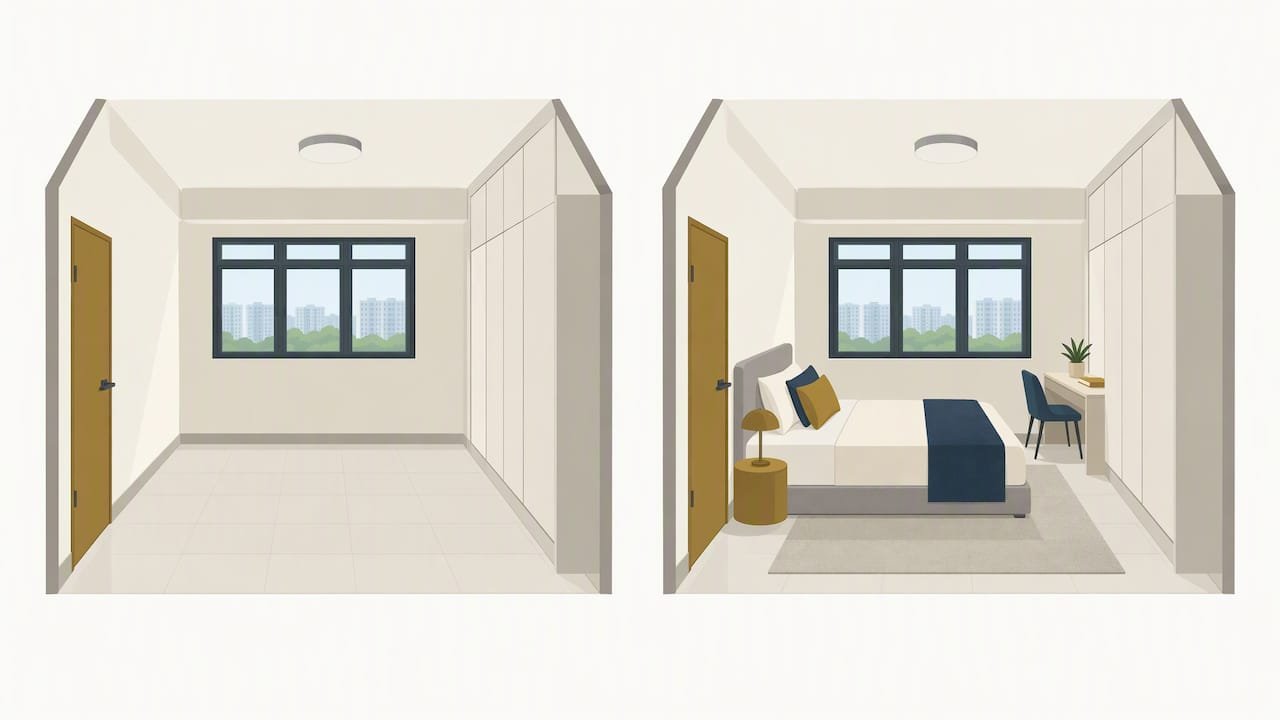
- Virtual staging uses digital furniture and decor added to photos of an empty room. It is cheaper and faster than physical staging, which makes it a sound option for vacant condos and HDB flats awaiting handover, but every such image must be clearly labelled as virtually staged. CEA guidance on AI-generated images in advertisements is explicit that listings must stay accurate and not misleading, and that virtual or AI-generated imagery needs clear disclosure.
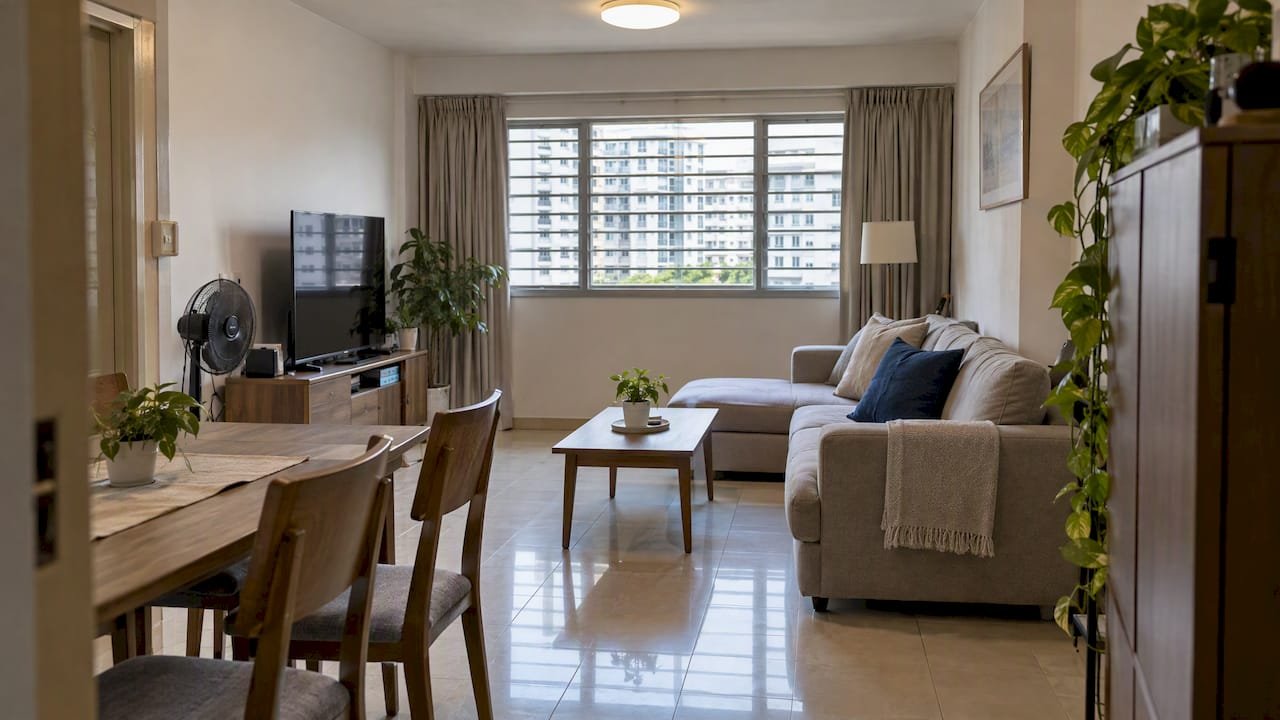
- Microstaging is the low-cost middle ground: fresh linen, better lighting, removing excess furniture, a few plants and a thorough declutter. It tends to deliver the strongest cost-to-impact ratio for mid-market HDB flats and mass-market condos, based on typical vendor packages described in local staging writeups.
The decision usually comes down to three questions: is the unit occupied or vacant, what is the budget, and which portals or social channels will carry the photos. A vacant unit heading to a major portal justifies either physical or virtual staging. An occupied flat being marketed mainly through an agent’s existing buyer list often does fine with microstaging alone.
Pro Tip: If your unit is occupied, spend your budget on decluttering and lighting before furniture hire, buyers notice clutter far faster than they notice a missing accent chair.
Room-by-room staging checklist before photos and viewings
Work through the property in the order a visitor actually experiences it, starting at the door.
- Entrance and living room: remove personal photos and religious or family items, rearrange seating to show clear circulation, and open curtains to maximise natural light.
- Kitchen and bathrooms: clear worktops completely, remove visible toiletries, and swap patterned towels or mats for plain neutral textiles.
- Bedrooms and study: use plain, light-coloured bedding, clear wardrobe surfaces, and keep furniture scaled to the room so it doesn’t look cramped in photos.
- Balcony and utility areas: show how the space is used (a small table and two chairs, a neat drying rack) rather than leaving them bare or crowded with storage.
Photography timing matters as much as the staging itself. A commonly used approach among Singapore stagers is to schedule natural-light photography between 9:30am and 11:30am, avoiding backlit balcony shots that silhouette the interior and obscure the room behind them, according to staging photography guidance.
One line matters more than the rest of this checklist: never digitally remove or add permanent features such as walls, windows, built-in storage or room dimensions. The Straits Times has reported industry concern over agents altering or enhancing photographs, and CEA is actively monitoring how AI tools are used in property marketing. Style what’s there; don’t invent what isn’t.
Costs and ROI: what staging actually costs in Singapore and how to judge it
Staging spend in Singapore spans a wide range, and the right figure depends entirely on the approach you choose. Full physical staging for a vacant unit typically runs as a day-rate or package model through a stylist, while microstaging packages cost a fraction of that because they reuse existing furniture and focus on cleaning, lighting and small replacements. Virtual staging is usually the cheapest per-image option, since it applies to photos rather than physical rooms, based on the package structures described in local staging vendor writeups.
To judge whether staging is worth it, work out your break-even uplift. For example, a typical staging spend is relatively low compared to average flat prices; you would need the staged listing to sell for a modestly higher price, or sell meaningfully faster in a market where holding costs matter, for the spend to pay for itself. That’s a low bar in most cases, which is why staging tends to be worth it unless the unit is already in high demand.
Staging tends to pay off most clearly when:
- Inventory in your neighbourhood is low and competing listings look similar.
- Buyers are price-sensitive and comparing several units in the same price band.
- You’re marketing to tenants rather than owner-occupiers, since rental decisions are often faster and more visual.
Where none of those apply, such as a unique landed property with little direct competition, a lighter microstaging approach is usually enough.
Compliance: CEA and URA rules that apply to staged and virtual images
Every property advertisement in Singapore, staged or not, has to meet CEA and URA standards for accuracy. Advertisements must not misrepresent the property, and developers marketing new launches follow URA’s own disclosure rules, as set out in guidance on CEA and URA advertising rules.
Three rules matter most for staged listings:
- Every advertisement must carry the agent’s full registered name, registration number and agency licence number, as required under CEA’s advertising rules.
- Any virtually staged or AI-generated image must be clearly disclosed as such, never presented as an unedited photograph.
- Permanent features (room size, layout, fixtures) can never be altered or misrepresented in any image, physical or digital.
Consent to advertise a listing is given per salesperson, and copied or dummy advertisements are prohibited under CEA practice guidance.
That means reposting another agent’s staged photos without your own written owner consent is a breach, not a shortcut, according to CEA ethical advertising guidance. Before any listing goes live on a portal or social media, check the agent details are current, every staged image is labelled correctly, and no permanent feature has been altered.
Hiring a stager versus doing it yourself
A professional stager’s quote should itemise the inventory list, the photography package, delivery and pickup dates, and whether damages insurance is included. If a quote is vague on any of those four points, treat it as a red flag rather than a deal.
For sellers doing it themselves, a tight workflow keeps the project manageable over a weekend:
- Declutter every room, starting with surfaces and floors.
- Deep clean kitchen and bathrooms.
- Fix visible repairs: chipped paint, loose fittings, squeaky doors.
- Remove excess furniture to improve circulation.
- Replace personal items with neutral decor.
- Maximise natural light in every room.
- Rearrange furniture to show the room’s intended use.
- Book photography for mid-morning, natural light.
Pro Tip: Do the decluttering and cleaning steps a full day before photography, rushed staging shows up in photos as much as it does in person.
How staging fits into a market-ready sale or rental plan
Staging works best as one part of a wider marketing plan, not a one-off fix. We build staging guidance into our valuation process, so when we assess a property we also flag whether physical staging, virtual staging or a microstaging pass would do the most for that specific unit before photography.
That approach sits alongside the market analysis we run for every listing, using detailed evaluations to spot pricing gaps and opportunities. Sellers get a staging-aware view of their property from the valuation stage onwards, not as an afterthought once photos are already taken.
If you want that assessment on your own unit, request a valuation before you commit to any staging spend.
— Anderson
Get a free valuation before you spend on staging
A free property valuation can tell you where your unit sits in the current market, and whether staging spend is likely to move the needle for your specific listing. That assessment feeds directly into marketing built to support staging photography, so the images you end up with match what buyers see in person.
Starting is straightforward: share your address and a few photos, and a valuation will be returned alongside notes on what staging approach (if any) suits the property. The process is kept transparent, with clear market analysis behind every figure and a defined next step rather than an open-ended waiting period.
- A free valuation with no obligation to list through us.
- Marketing support designed around staging-ready photography.
- A clear view of how staging could affect your net proceeds, covered alongside agent commission structures.
Request your free valuation and find out whether staging is worth it for your property.
FAQ
What is the difference between home staging and interior design?
Home staging is short-term marketing aimed at helping buyers or tenants picture themselves in a space before a sale or let. Interior design is a longer-term investment in how a home looks and functions for the people living in it, and the two have different goals even though some techniques overlap.
How much does home staging cost in Singapore?
Costs vary widely depending on approach: full physical staging for a vacant unit costs the most, microstaging packages cost considerably less because they reuse existing furniture, and virtual staging is typically the cheapest per image since it applies only to photographs, based on local staging package structures. A free valuation is a practical first step to judge whether the spend suits your specific listing.
What are popular interior design themes in Singapore right now?
Neutral, light-toned interiors with natural materials remain a common preference among Singapore buyers, since they photograph well and suit a wide range of furniture styles during viewings. Minimalist layouts that emphasise circulation and natural light tend to perform better in listing photos than heavily decorated or dark-toned rooms.
Do I need to disclose virtually staged photos in my listing?
Yes. Any virtually staged or AI-generated image must be clearly labelled as such under CEA guidance on AI-generated advertising images, and permanent features like layout or room size can never be altered in the image.
Is staging worth it if I’m renting out my property rather than selling?
Staging often helps rental listings move faster, since tenant decisions tend to be quicker and more visual than purchase decisions. If you’re considering a short-term rental, check the short-term rental rules in Singapore before listing, as compliance requirements differ from standard long-term lets.
Sources
- Written reply on regulations for advertisements that make false claims by using AI-generated images · METI (Singapore)
- Real Estate Advertising in Singapore: CEA & URA Rules
- Forum: property agents should not alter or enhance photographs | The Straits Times
- Property buyer research Singapore: showflat behaviour · Assembled
- CEA ethical advertising guidelines: RESPrep


