
URA Master Plan Singapore: How to Read It Before You Buy
The URA Master Plan is the legal land use plan for Singapore, and reading it for the plot you are considering takes about ten minutes: look up the address, note the zoning and the plot ratio, then check what is planned around it. This guide shows how, and why the check belongs before any offer, not after. We also offer a free property valuation that you can set beside what the plan tells you about a site.
TL;DR
- The Master Plan is the statutory plan for the next 10 to 15 years and is reviewed every five years. Master Plan 2025 was gazetted on 1 December 2025.
- Use URA SPACE or OneMap, enter the address, and read the zoning, the maximum permissible plot ratio and any boundary lines.
- Plot ratio is an upper limit, not a promise: site shape, setbacks, height limits and other agencies’ requirements can reduce what can be built.
- Planned MRT lines and amenities are signals about direction, not guaranteed outcomes for a price or a rental.
- For a property decision, pair the zoning check with a valuation and a legal requisition.
Table of Contents
- What the URA Master Plan is and what it controls
- Where Master Plan 2025 stands
- How to find a property or area on the Master Plan map
- How to read the legend and land use zones
- Plot ratio and height: what a site can become
- Checking MRT lines, amenities and neighbourhood change
- What the Master Plan cannot tell you
- A short worked example
- From reading the plan to making an offer
- FAQ
- Sources
What the URA Master Plan is and what it controls
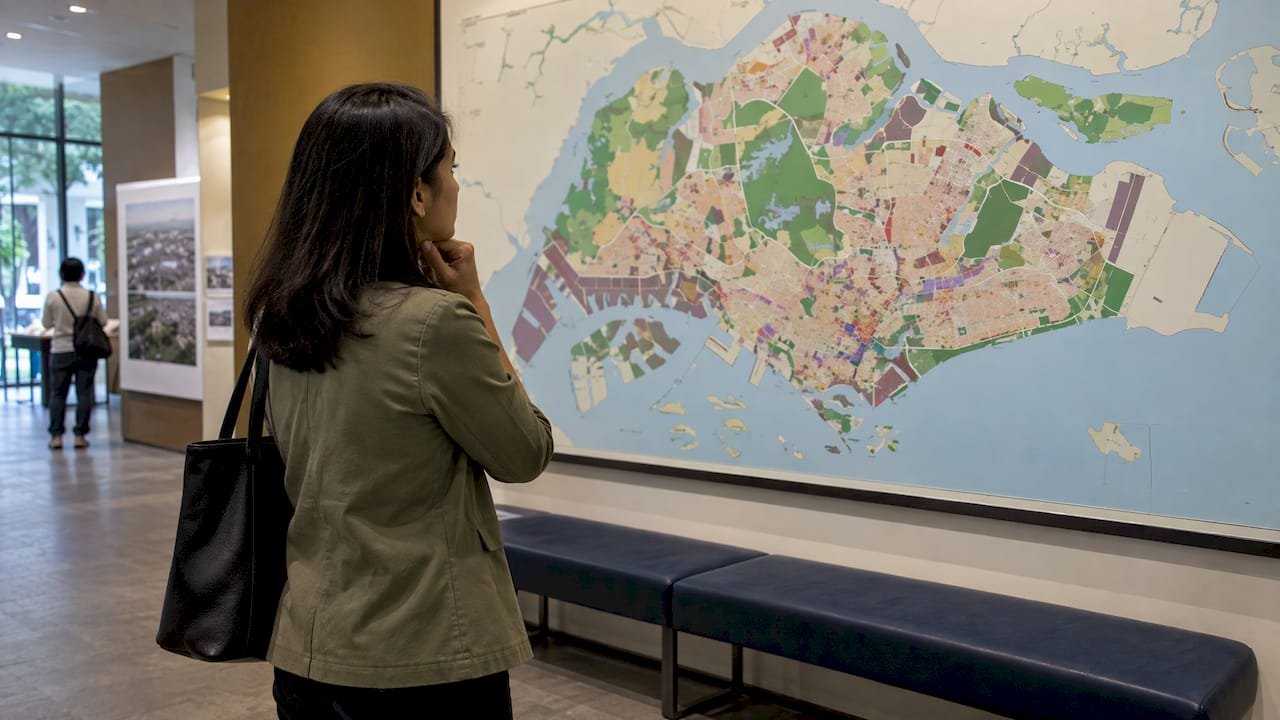
According to the URA Master Plan page, the Master Plan is the statutory land use plan that guides Singapore’s development over the next 10 to 15 years. It is reviewed every five years. It turns the broad strategies of the Long-Term Plan into detailed plans, and it shows the permissible land use and density for developments across the island.
The two plans work at different distances. SG101 explains that the Concept Plan gives broad guidelines over 40 to 50 years, while the Master Plan lays out the specifics for individual plots. The Centre for Liveable Cities describes the same chain: the Long-Term Plan sets strategic land uses and infrastructure needs, and the statutory Master Plan details land and property development.
For a buyer, that means the Master Plan answers three practical questions about any plot:
- What may be built or used here (the zoning)?
- How much may be built (the plot ratio and height controls)?
- What is planned nearby that could change the neighbourhood?
The URA says the plan should be read together with its Written Statement, and that it is supported by Special and Detailed Control Plans. The map shows the colours; the Written Statement explains what each zoning permits.
Where Master Plan 2025 stands
Master Plan 2025 (MP2025) was officially gazetted on 1 December 2025. The draft was exhibited at the URA Centre and 14 other locations from 25 June to 29 November 2025. URA reports that it engaged close to 220,000 people between October 2023 and June 2025.
The Straits Times reported that the changes proposed in the draft were approved, with modifications, by the National Development Minister between 28 September and 24 November 2025, and that the plan is legally binding.
MP2025 is organised around four themes, listed on the URA themes page:
- Shaping a Happy and Healthy City
- Enabling Sustainable Growth
- Strengthening Urban Resilience
- Stewarding Nature and Heritage
The themes are useful context, but a property decision rests on the plot-level detail below.
How to find a property or area on the Master Plan map
The official tool is URA SPACE, the URA’s integrated map portal. Its front page offers a “Find Master Plan 2025 Zoning” service, and the search box accepts three or more characters, so you can type a street name, postal code or project name. OneMap, run by the Singapore Land Authority, also carries the Master Plan layer with its own legend.
A reliable routine:
- Search the exact address or postal code. Zoom in until you can see the plot boundary, not just the road.
- Switch on the Master Plan 2025 layer. Make sure you are not looking at an older layer from a previous edition.
- Click the plot. Note the zoning label and the maximum permissible plot ratio if one is shown.
- Open the legend. Do not guess from colour alone, because similar shades can mean different zonings.
- Pan out to the surrounding blocks. Note what sits across the road, behind the plot and at the corner. The neighbours matter as much as the plot itself.
- Save a screenshot with the date. The plan is reviewed every five years and amended in between, so you want a record of what it showed when you decided.
For shophouses, URA SPACE can tell you whether a proposed use is likely to be allowed in a given unit, the conditions for approval and whether planning permission is required, according to URA’s guide to its map portal. Written Permissions issued since the year 2000 can be downloaded there. That is useful when a seller says a unit “can be used as” something specific. Our guide to shophouse investment in Singapore covers what yields private buyers can reasonably expect.
How to read the legend and land use zones
The OneMap legend for Master Plan 2025 lists categories such as Residential With Commercial At 1st Story, Business 1, Business 2, Business Park, Road, Transport Facilities, Railway, Mass Rapid Transit, Light Rapid Transit, Utility, Cemetery, Agriculture, and Port / Airport. It also shows the Planning Area Boundary, the Plot Ratio Boundary and the Maximum Permissible Plot Ratio.
The zoning names tell you what the land is for, and that decides what happens next to your home:
| Zoning type | What it signals for a buyer |
|---|---|
| Residential | Homes are the intended use. Check the Written Statement for the building types allowed. |
| Residential With Commercial At 1st Story | Shops or eateries at street level, homes above. Expect footfall and some noise. |
| Business 1 | Cleaner industrial and business uses. Relevant to industrial buyers and tenants. |
| Business 2 | Heavier industrial uses. A neighbour to consider if the plot sits beside homes. |
| Business Park | Office and R&D-type campuses, often with strong weekday demand. |
| Transport Facilities, Railway, MRT, LRT | Land set aside for transport. Look at how close it is to your plot. |
| Utility | Infrastructure sites. Not a place for homes. |
Industrial buyers should note that B1 and B2 differ in what they allow. Our comparison, choosing B1 or B2 industrial in Singapore, sets out the difference for buyers and tenants, and our transaction-ready checks for industrial property show what to confirm before you commit.
Commercial buyers should also read zoning with tax in mind. Zoning decides whether a property counts as residential or commercial for stamp duty purposes in practice, and our article on five zoning checks for commercial property and ABSD goes through them.
Plot ratio and height: what a site can become
Plot ratio is the main number behind redevelopment potential. The URA Gross Plot Ratio page states that the development potential of a residential development is guided by the Gross Plot Ratio specified in the Master Plan.
The arithmetic is simple: gross floor area equals plot ratio multiplied by site area. A 10,000 sq ft site with a plot ratio of 2.1 supports up to 21,000 sq ft of gross floor area. This is an illustration of the formula, not a real site.
The same URA page is clear that the Master Plan plot ratio is an upper bound. It may not always be achievable because of the shape of the plot, topography or ground conditions, building setbacks, building height, or the technical requirements of other authorities. So the number on the map is a ceiling you test, not a figure you bank.
When you compare two similar plots, ask:
- Is the plot regular in shape, or narrow and irregular?
- Are there height controls nearby that would cap the number of storeys?
- Has the existing building already used the full plot ratio? If so, a rebuild gives no extra floor area.
- Does a Plot Ratio Boundary line cut through the plot?
For an en bloc hopeful or a landed owner thinking about redevelopment, these questions often matter more than the zoning colour. Where the question is how a specific plot compares with the market, our free property valuation is a practical first step.
URA also publishes Development Charge rates, which it revises every six months. URA SPACE lets you determine the rate for a site and compare it against previous rates, as the URA map portal guide explains. If a change of use or higher intensity is in play, that rate affects the economics.
Checking MRT lines, amenities and neighbourhood change
The Master Plan shows land reserved for transport and amenities, which is why buyers read it for what is coming. A few examples from MP2025 show the kind of detail available.
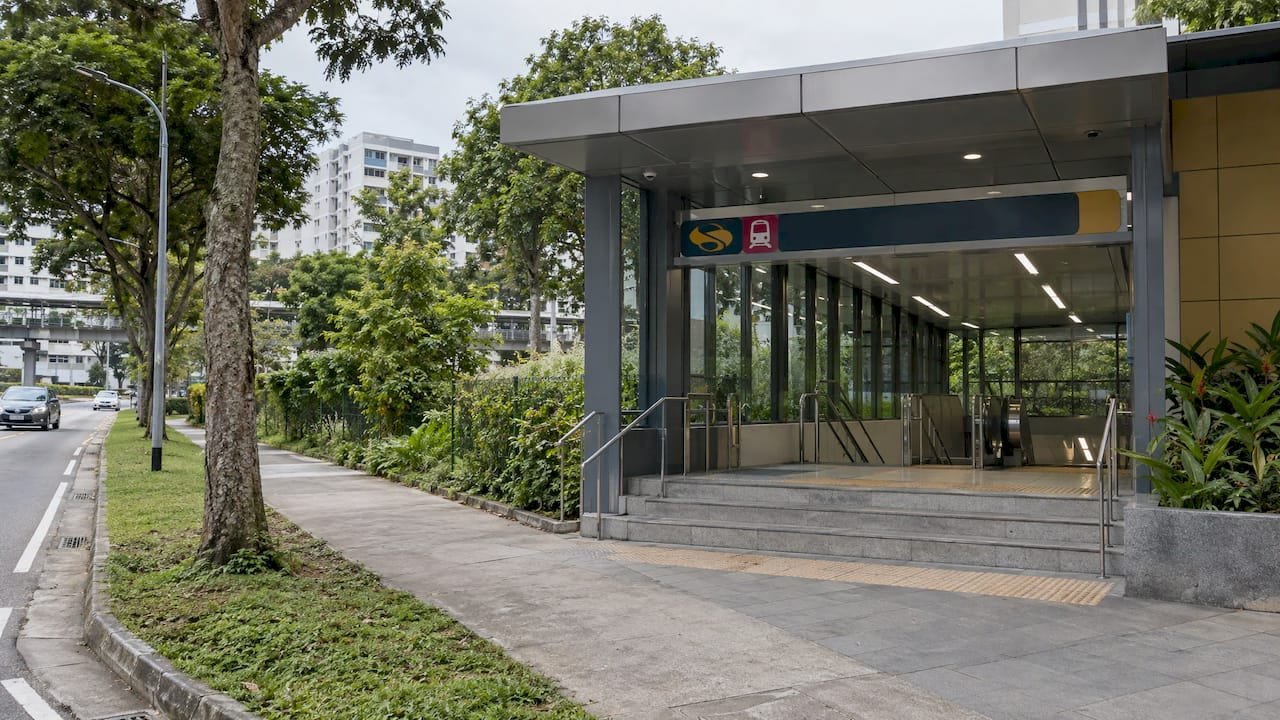
In the West region, URA says the Jurong Region Line is under construction and expected to open in stages from 2027 to 2029. When it opens, 60,000 more households in the region are set to be within a 10-minute walk of a train station. The same page says Phase 2 of the Cross Island Line will add four stations (Maju, Clementi, West Coast and Jurong Lake District) by 2032, and that Hume MRT Station on the Downtown Line opened in February 2025.
In the central area, CNA reported that the draft plan proposed 80,000 new homes, including in Newton and Orchard. That includes a new urban village beside Newton MRT station and Newton Food Centre, and around 1,000 private homes at Paterson, some in a new integrated development above Orchard MRT station. URA also said to expect a shop-lined route from Orchard MRT station towards Orchard Road and River Valley, new public spaces and new cycling paths.
To check your own area, use the regional plans on the URA website for the region, then confirm the plot-level detail in URA SPACE. Then ask three things:
- Is the project under construction, or only safeguarded as a corridor?
- Is the opening described as staged, and which stage serves your plot?
- Will construction itself affect the plot for several years?
Families weighing schools and parks, and expats choosing a rental area, can use the same method. Our guide to renting in Singapore as an expat covers rules, areas and costs.
What the Master Plan cannot tell you
A plan this useful still has edges. Knowing them keeps a good check from turning into a wrong assumption.
It is not a title search. URA’s legal requisition service gives the latest planning decision and the current Master Plan zoning for a property. Any member of the public may apply. The fee is $54.50 including GST per property, and the information is emailed within three working days once payment is processed. It does not cover acquisition of a property, and it does not include road or drainage proposals. Road proposals come from a Road Line Plan applied for from LTA, and drainage proposals from a Drainage Interpretation Plan from the Ministry of Sustainability and the Environment. In practice, that is a standard step in a purchase, and the lawyer handling your conveyancing will usually request it.
It is not a price forecast. A new MRT station or a new urban village signals direction. How much of that is already in today’s asking price is a separate question, and it is one a valuation answers better than a map.
It changes. The plan is reviewed every five years, and the draft stage shows proposals that may be modified before they become law, as the 2025 process showed. Always confirm you are reading the gazetted edition.
It does not cover tax. Zoning, ownership structure and buyer profile decide stamp duty, which is a separate calculation. Our market outlook and buyer checklist frames what to check before a purchase.
A short worked example
Suppose you are looking at a mixed-use shophouse-area unit and a seller says the upstairs can be a studio rental. Here is how the checks run:
- Enter the address in URA SPACE and note the zoning shown.
- Open the legend and confirm what that zoning allows.
- Use the shophouse use function to see whether the proposed use is likely to be allowed and under what conditions.
- Download any past Written Permissions for the unit.
- Order a legal requisition if you are moving to an offer.
- Compare the asking price with a valuation.
This takes an afternoon and removes the most common reason for a deal falling apart: a planned use that the zoning never allowed. If the plan is a short-stay rental, read our four checks for short-term rentals in Singapore as well.
Our view on reading the Master Plan
We treat the Master Plan as the first filter, not the last. It tells you what a plot may become, and a good buying decision starts there. But the plan does not tell you what a property is worth today, and that is the gap that costs buyers money.
That is why we pair the planning check with a market evaluation. We look for gaps and opportunities, and we offer a free property valuation so you can see a figure for your own address before you negotiate. Our screening of undervalued properties shows how we approach that comparison.
For investors, we also guide clients on how structure and zoning interact with Additional Buyer’s Stamp Duty, which is why we read the zoning before we talk about price.
Anderson
From reading the plan to making an offer
Once the zoning and plot ratio fit your plan, the next question is price. Register Today lists residential and commercial properties in Singapore, and our team offers personalised negotiation and detailed market evaluations. Start with a free property valuation for the address you are studying, or browse residential listings and commercial listings.

If you are selling, the same zoning and plot ratio facts help you explain what your property offers a buyer. You can reach our team for buying, selling or renting through the Register Today homepage.
FAQ
How often is the URA Master Plan updated?
The Master Plan is reviewed every five years, according to URA. The current edition, Master Plan 2025, was gazetted on 1 December 2025. Amendments can occur between reviews, so check the date of the layer you are viewing.
Is the URA Master Plan legally binding?
Yes. It is Singapore’s statutory land use plan, and the Straits Times reported that the gazetted plan is legally binding. It guides development for the next 10 to 15 years and shows the permissible land use and density for each plot.
How do I check the zoning of a specific property?
Search the address in URA SPACE and open the Master Plan 2025 zoning layer, then read the label against the legend. For a formal record, apply for a legal requisition, which costs $54.50 including GST per property and is emailed within three working days of payment.
Does a higher plot ratio mean I can build more?
Not always. The Master Plan plot ratio is the upper bound, and site shape, topography, setbacks, building height and other agencies’ requirements can limit what is achievable. Treat it as a ceiling to test with a qualified professional.
Will a new MRT line raise the value of my property?
The plan shows where stations and lines are intended, with opening periods such as 2027 to 2029 for the Jurong Region Line. It does not set prices. A valuation of your specific address shows how the market currently reflects the location.
Sources
- Master Plan, Urban Redevelopment Authority
- Master Plan 2025 themes, URA
- Gazette of Master Plan 2025, URA
- Thinking Long-Term, SG101
- Integrated Master Planning and Development, Centre for Liveable Cities
- URA SPACE
- OneMap Map Legend
- Gross Plot Ratio, URA
- Useful features in URA’s online map portal
- Legal Requisition, URA
- More Convenient and Connected Homes, URA West region
- 80,000 new homes, including in Newton and Orchard, CNA
- Detailed plans for Kranji racecourse housing estates, The Straits Times