

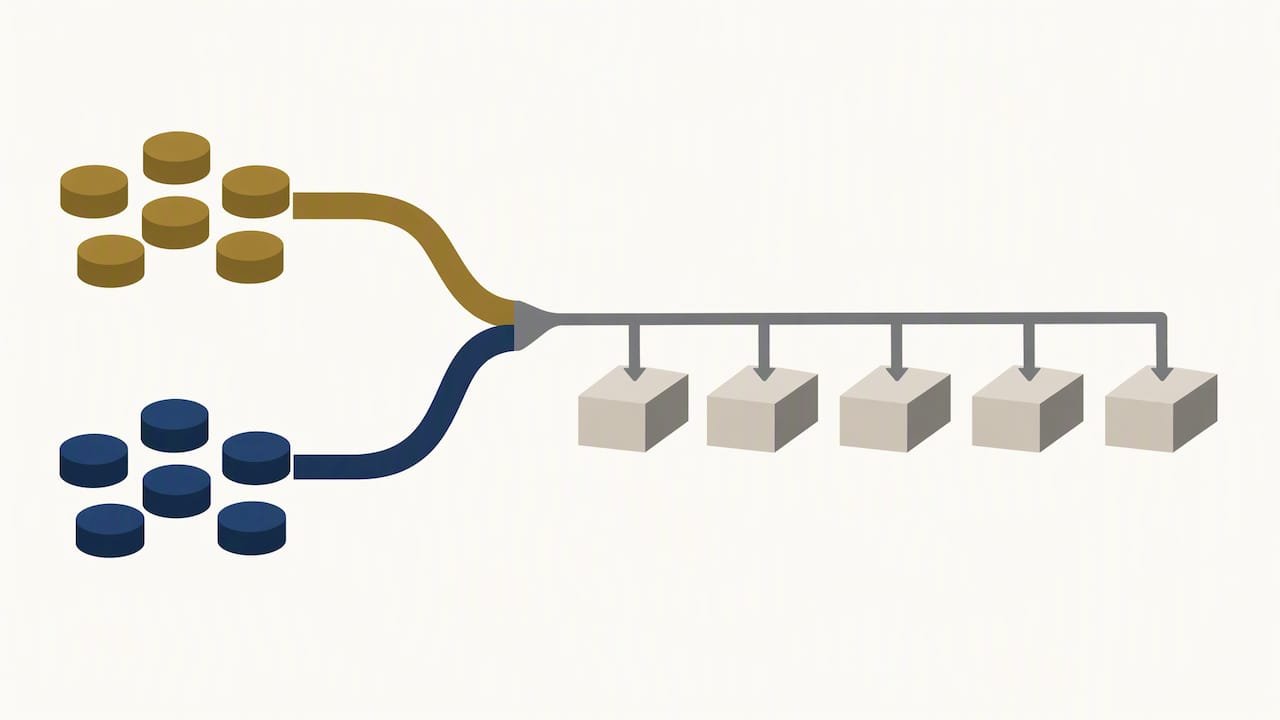
25% at TOP: Progressive Payment Schedule for Singapore Buyers
A progressive payment schedule for a Singapore new launch condo splits the purchase price into milestone linked instalments set out in Form 5: roughly 20% early, around 40% across construction stages, 25% at TOP and 15% at final completion. The practical takeaway is simple: check your CPF usage limit and get formal bank approval well before the later calls land.
TL;DR:
- Form 5 divides payments across construction milestones, with 25% due at TOP and 15% at final completion; your signed agreement controls exact amounts and deadlines.
- CPF use depends on age, lease length, loan details, and other property ownership, so check the official calculator and reserve cash for the largest instalments.
- Staged payments do not increase your borrowing limit; reconfirm your bank approval if income or debts change, and request a written disbursement schedule.
- Developers must hold pre TOP instalments in a Project Account, but buyers remain responsible for valid calls and should verify milestone evidence before paying.
Table of Contents
- Form 5 stages and how much each one costs you
- When payments fall due and how notices work
- Using CPF and cash to fund each instalment
- Why the schedule doesn’t change what the bank will lend you
- What the Project Account actually protects you from
- Your checklist from OTP to final completion
- The one habit that saves buyers from late payment trouble
- FAQ
- Sources
Form 5 stages and how much each one costs you
The percentage split buyers see on new launch condos is not invented by the developer. It follows the standard payment schedule prescribed in Form 5 of the Housing Developers Rules, which sets out ten typical milestones and the share of the purchase price due at each one. Individual Sale & Purchase Agreements can vary the wording, so the executed contract always governs the actual amounts and dates, but Form 5 remains the reference point the industry builds around.
The standard allocation runs as follows:
- 20% on grant of the Option to Purchase and signing of the Sale & Purchase Agreement
- 10% on completion of foundation work
- 10% on completion of the reinforced concrete framework
- 5% on completion of partition walls
- 5% on completion of roofing
- 5% on completion of door and window frames, electrical wiring, internal plastering and plumbing
- 5% on completion of car park, roads and drains serving the housing project
- 25% on notice of Temporary Occupation Permit (TOP) or vacant possession
- 15% on final completion of the project
Laid against a purchase price, the jumps become easier to visualise:
| Milestone | % of price | Approximate amount on a $1,000,000 unit |
|---|---|---|
| OTP + S&P signing | 20% | approximately one-fifth of the purchase price |
| Foundation | 10% | approximately one-tenth of the purchase price |
| RC framework | 10% | approximately one-tenth of the purchase price |
| Partition walls | 5% | approximately five percent of the purchase price |
| Roofing | 5% | approximately five percent of the purchase price |
| Doors, windows, wiring, plumbing | 5% | approximately five percent of the purchase price |
| Car park, roads, drains | 5% | approximately five percent of the purchase price |
| TOP / vacant possession | 25% | approximately one quarter of the purchase price |
| Final completion | 15% | approximately fifteen percent of the purchase price |
That concentration at the end is the single most important fact to plan around, a point a partner guide on the cash jump at TOP also walks through with worked figures.
When payments fall due and how notices work
Developers do not simply decide to bill you whenever they like. Under the statutory framework, many instalments become due within 14 days after the developer issues the required notice or documentary evidence that a milestone has been reached, under the Housing Developers Rules. Early calls tend to be widely spaced, following the grant of the Option to Purchase and then the signed Sale & Purchase Agreement, while the TOP and final completion calls often cluster closer together as the project nears handover.
A few habits make this easier to manage:
- Diarise the expected window for each milestone as soon as your S&P is signed.
- Check the exact deadline wording in your own executed agreement rather than relying on the Form 5 template.
- Ask for the developer’s documentary evidence of the milestone before you release payment.
Pro Tip: Set a calendar reminder for 10 days after each expected milestone notice, not 14, so a late or missing letter doesn’t leave you scrambling for funds.
Using CPF and cash to fund each instalment
CPF Ordinary Account savings can cover a meaningful share of these instalments, but the amount is capped and depends on several factors rather than a flat percentage. According to CPF’s own guidance, usage limits shift with your age, the property type, the loan you take, the remaining lease on the property and whether you already own other property financed with CPF. The CPF housing-usage calculator gives you an estimate of how much OA you can put towards a purchase, and it notes clearly that the output is an estimate, not a guarantee, with shorter remaining leases sometimes blocking OA use altogether.
A practical funding plan for each call looks like this:
- Work out your likely CPF contribution using the official calculator before you commit to a unit.
- Set aside a dedicated cash buffer specifically for the TOP and final completion calls, since these are the largest and least flexible.
- Re-run the CPF estimate before each large instalment, since your balance, age band or co-owner details may have shifted since your last check.
Working out the downpayment split between cash and CPF early, as covered in our guide to condo downpayments, avoids an unpleasant surprise when the 25% TOP notice arrives.
Why the schedule doesn’t change what the bank will lend you
Spreading payments over several years does not loosen the lending rules that decide how much you can borrow. Banks assess residential property loans against the loan to value limits, minimum cash requirements and Total Debt Servicing Ratio set out in MAS Notice 632, and those tests apply regardless of how far away your TOP call sits.
A few things worth acting on early:
- Treat any indicative approval you got at the OTP stage as a starting point, not a guarantee, and revisit it before large later calls.
- Confirm your TDSR position and LTV limit again if your income, other debts or the loan tenure have changed since you first applied.
- Ask your bank for a written disbursement schedule so you know exactly when it will release funds against each milestone.
Interest rates, your income and other commitments can all move between signing the S&P and reaching TOP, so a formal reassessment before the biggest calls is worth the short delay.
What the Project Account actually protects you from
Instalments paid before TOP are not simply handed to the developer to spend freely. Licensed developers must deposit these funds into a Project Account, and withdrawals are restricted to prescribed purposes under the Housing Developers (Project Account) Rules, such as construction costs, buyer refunds and limited administrative expenses.
- Withdrawals generally require certification from a qualified person or supporting documentary proof.
- An auditor checks the account and the developer’s compliance with the withdrawal rules.
- Surplus funds may only be withdrawn after TOP, subject to contingency deductions and further auditor certification.
Pro Tip: A healthy Project Account reduces the risk that a developer runs out of funds mid-build, but it does not reduce what you owe: you still need to be ready to meet every valid call on time.
Your checklist from OTP to final completion
- Read the payment schedule clause in your executed S&P and note the exact deadline wording, not just the Form 5 template.
- Diarise every expected milestone notice as soon as the S&P is signed.
- Run the CPF housing-usage calculator and get a formal bank assessment before you need either.
- Set aside cash specifically earmarked for the 25% TOP and 15% final completion calls.
- Confirm the project has a properly operated Project Account and ask your solicitor about stakeholder arrangements.
- Request documentary evidence of the milestone before paying, and know where to lodge a notice if you dispute a deduction.
The one habit that saves buyers from late payment trouble
The buyers who get caught out are rarely the ones who misunderstood the Form 5 percentages. They are the ones who budgeted to the early instalments and stopped checking once the loan felt “approved”.
A broader market view, free valuations and coordinated checks on CPF and bank timing are the kind of groundwork we help buyers through at Register Today, alongside our market gap analysis for those weighing a purchase against ABSD exposure. Use the calculators and formal assessments, rather than assumptions, at every stage.
— Anderson
This article is general information, not a substitute for advice from a qualified financial advisor. Consult a qualified financial professional about your own circumstances before acting on anything here.
FAQ
What is a progressive payment schedule for a condo?
It is a milestone based payment structure, set out in Form 5, where buyers pay a percentage of the price as each construction stage is completed rather than the full amount upfront.
How much deposit do I need upfront for a new launch condo?
The first instalment under the standard schedule is 20%, covering the Option to Purchase and the signed Sale & Purchase Agreement, as set out in Form 5. Part of this can often be paid from CPF Ordinary Account savings, subject to the limits in the CPF housing-usage calculator.
Can I use CPF for every progressive payment instalment?
CPF Ordinary Account savings can be used for many instalments, but the amount is capped based on your age, the remaining lease, the loan taken and any other property you own, according to CPF’s guidance. It is worth rerunning the official calculator before each large call rather than assuming the same limit applies throughout.
Does a progressive payment schedule reduce how much I can borrow?
No. Banks apply the same loan to value and Total Debt Servicing Ratio tests under MAS Notice 632 regardless of the payment timeline, so an early indicative approval should always be reconfirmed before the TOP and final completion calls.
What happens if I can’t pay an instalment on time?
The Sale & Purchase Agreement sets out the consequences of a late payment, which can include interest charges or, in serious cases, termination, so the exact wording in your own contract matters more than general guidance. Speak to your solicitor as soon as you anticipate a shortfall rather than after a deadline passes.
Sources
For the exact statutory wording, check the Housing Developers Rules and the Project Account Rules, run the CPF housing-usage calculator, and review MAS Notice 632 and IRAS stamp duty guidance. Your solicitor or lender should confirm how these apply to your specific S&P.
- Housing Developers Rules (Form 5) — Singapore Statutes Online
- Using your CPF to buy a home — CPF
- MAS notice 632 — Residential property loans (2025)


