


Mortgagee Sale in Singapore: How Bank Sales Work and How to Buy
A mortgagee sale, also called a bank sale, happens when a borrower defaults on a property loan and the lender uses its power of sale under the mortgage to recover what it is owed. The property is then sold, usually by public auction or tender, on the bank’s standard terms and normally “as is, where is”. Buyers can find value this way, but only if they arrange financing early, check the property thoroughly and understand that a winning bid is binding.
This guide explains the process stage by stage, what to prepare, what the latest listing figures say and how a mortgagee sale differs from an ordinary purchase.
TL;DR
- A mortgagee sale is a lender-led sale of a property after the owner defaults. It runs through auction, tender or, if those fail, private treaty.
- The property is sold as is. Inspect where possible, have a lawyer run title searches and confirm whether it comes with vacant possession.
- Arrange an Approval in Principle (AIP) and a deposit before you bid. A winning bid binds you, and completion dates can be fixed.
- Mortgagee-sale listings reached a six-year high in H1 2026, but analysts describe the market as selective, not broadly distressed.
- Budget for stamp duties (BSD and, where it applies, ABSD), legal and valuation fees, and any arrears the conditions of sale assign to you.
Table of Contents
- What a mortgagee sale is and why a property ends up in one
- How a mortgagee auction or tender works
- What to arrange before you bid
- Due diligence on an as-is property
- Costs and risks to budget for
- How a mortgagee sale differs from an ordinary private sale
- What the 2026 listing figures say
- Our perspective
- Work with a team that checks the numbers first
- If you are the owner facing a mortgagee sale
- FAQ
- Sources
What a mortgagee sale is and why a property ends up in one
When you take a mortgage, the bank holds a legal charge over the property. If repayments stop and the borrower cannot catch up, the bank can exercise its power of sale under the mortgage to recover the money it is owed. The proceeds go first to the lender. Anything left over belongs to the owner, and any shortfall may remain the owner’s debt.
For a buyer, the reason behind the sale matters less than the way the sale is run. The seller is now a financial institution, not a homeowner. The bank has rarely lived in the property, knows little about its condition and gives few promises about it. That single fact shapes almost every difference between a bank sale and a normal purchase.
In other markets the same process is known as foreclosure, and a plain foreclosure glossary is a quick way to learn the vocabulary if you read overseas material. Singapore terms and rules differ, so rely on Singapore documents for the actual transaction.
How a mortgagee auction or tender works
Mortgagee sales are typically conducted by public auction or tender. If a property does not sell, it may later be offered by private treaty. The route is set by the bank and its appointed agent or auctioneer.
Public auction
An auction offers the property to the highest bidder on a set date. The bank often has an undisclosed reserve price, so a property can be withdrawn if bidding stays below it. Auction houses publish their upcoming properties and event dates, so check the auctioneer’s own page for the current calendar instead of relying on old listings.
Tender
In a tender, buyers submit sealed offers by a closing date, usually with a deposit. You do not see competing bids, so your offer has to reflect your own valuation and your own limit. The bank can accept the best offer, negotiate or reject all of them.
Private treaty after a failed sale
When auction or tender fails, the property may be marketed in the usual way and negotiated with the bank. Listings often carry the label “bank sale” at this stage. Terms are still the bank’s, so expect limited flexibility.
| Route | How the price is set | What you commit to | Main thing to prepare |
|---|---|---|---|
| Public auction | Highest bid on the day, often above an undisclosed reserve | A winning bid binds you | Financing and deposit ready before bidding |
| Tender | Sealed offers by a closing date | An accepted offer binds you | A researched maximum price and the deposit |
| Private treaty | Negotiated with the bank | Terms in the bank’s conditions of sale | Lawyer review of conditions before signing |
What to arrange before you bid
Preparation decides whether you can bid with confidence. Before bidding, arrange financing, such as an Approval in Principle, and be ready to pay a deposit at the auction or with your tender. Completion dates can be fixed, so confirm that your loan can be released in time.
A practical order of work:
- Set your borrowing limit. Check how MSR, TDSR and LTV apply to your income and the property type. Our guide to Singapore mortgage types walks through these checks.
- Get an AIP. It tells you what a bank is likely to lend, so you do not bid beyond it.
- Prepare the deposit. Confirm the amount and the form of payment in the conditions of sale and be ready to pay it on the day.
- Brief a lawyer early. Ask for the conditions of sale and have them reviewed before you bid, not after.
- Fix your maximum price. Decide it in advance from a valuation and write it down. Auction rooms make it easy to overspend.
If your bidding plan depends on selling another property first, think carefully about timing, because a winning bid does not wait for your other sale to complete.
Due diligence on an as-is property
Mortgagee-sale properties are sold as is, where is. That includes defects, missing fittings and unapproved renovations, and the bank may disclaim responsibility for items left behind. The checks below replace the assurances an ordinary seller might give.
- Inspect if you can. Access is not always granted, so ask the agent early. Our property inspection checklist for Singapore buyers lists what to look at room by room.
- Get a valuation. A valuation gives you a ceiling for your bid. You can start with our free property valuation to see where comparable homes have transacted.
- Have your lawyer run title searches. They should search with the Singapore Land Authority and raise government requisitions, which can reveal encumbrances, planned acquisition or other issues.
- Confirm possession. Find out whether the property is sold with vacant possession or with a tenant or occupier in place. An occupied property can add time and cost.
- Check for unauthorised works. Buyers may have to rectify unauthorised works, so look for alterations that do not match approved plans.
- Look beyond the surface. Water damage, old materials and structural alterations are hard to judge by eye. For older buildings, a specialist inspection before you commit is sensible, and a short read on why inspections matter before renovation shows the kind of hidden issue worth ruling out.
If the property is a landed home, extra title and boundary questions can arise. Our note on strata landed versus conventional landed homes covers what to ask. For shops, offices and industrial units, permitted use matters as much as price, so see our guides to commercial property and industrial property.
Costs and risks to budget for
The bid price is not the total cost. Buyers should budget for BSD, applicable ABSD, legal and valuation fees, and any arrears assigned to them by the conditions of sale. Whether ABSD applies depends on your profile and the number of properties you own, so confirm the rate for your situation with IRAS or your lawyer before you bid.
Build a simple worksheet before auction day:
- Maximum bid price
- Deposit and balance due at completion
- BSD, and ABSD if it applies to you
- Legal and valuation fees
- Arrears or outstanding charges named in the conditions of sale
- Repair and rectification allowance for as-is defects or unapproved works
- Holding costs if the property is occupied or needs time before use
The contractual risk is simple: terms are standard and rarely changed, and the winning bid binds you. That makes the review of conditions before bidding the most valuable hour you will spend.
How a mortgagee sale differs from an ordinary private sale
In an ordinary sale, you negotiate price, completion date and sometimes inclusions with an owner who knows the property. In a mortgagee sale, the bank’s conditions of sale are standard and rarely changed, the bank knows little about the property and makes few promises, and a winning bid binds the buyer.
| Point | Ordinary private sale | Mortgagee sale |
|---|---|---|
| Seller | Owner who lived in or managed the property | Lender exercising its power of sale |
| Terms | Often negotiable | Standard and rarely changed |
| Information on the property | Owner can answer questions | Bank knows little and promises little |
| Condition | Negotiable, with repairs or credits | As is, where is |
| Commitment | Option and sale and purchase agreement | Winning bid or accepted tender binds the buyer |
| Timeline | Agreed between parties | Often fixed by the conditions |
What the 2026 listing figures say
Mortgagee-sale listings reached a six-year high in H1 2026, with 216 listings recorded, and tighter financing conditions were cited. Analysts described the market as selective rather than a signal of broad distress, with demand continuing for assets offering redevelopment potential or value pricing.
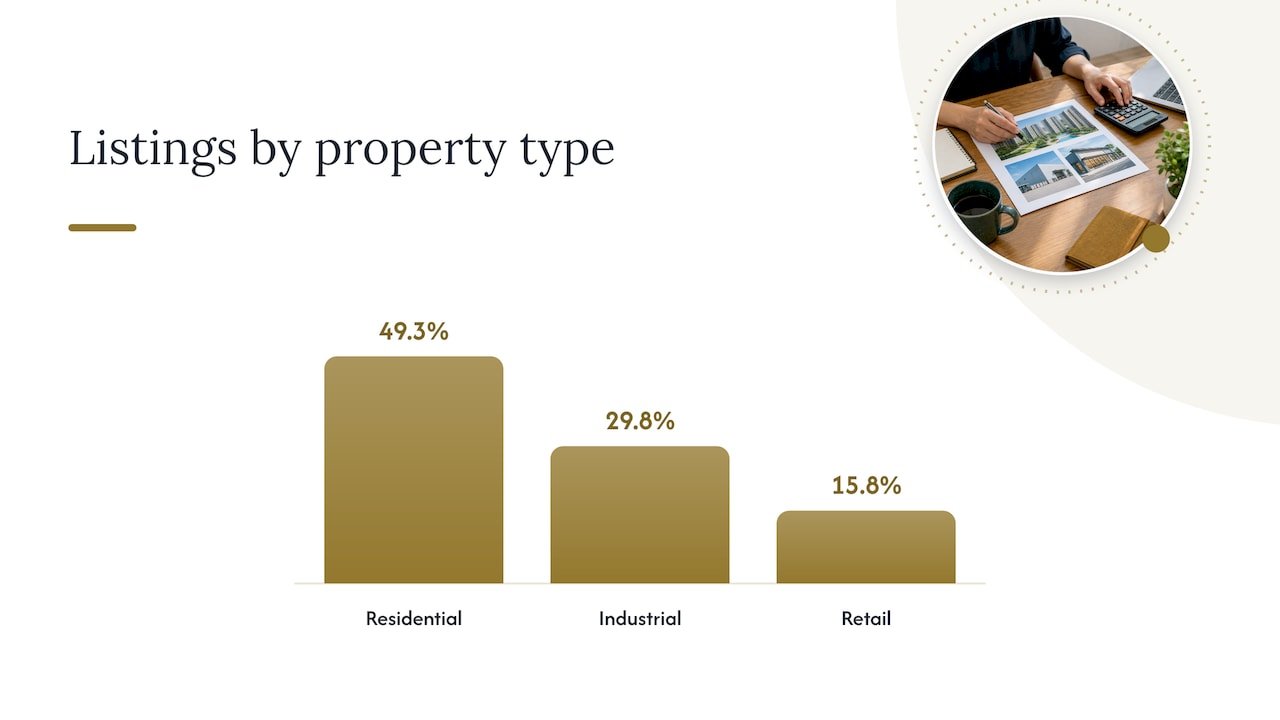
By property type, residential made up about 49.3% of H1 2026 listings, industrial 29.8% and retail 15.8%. For a buyer, the practical reading is that choice has widened, but not every listing is a bargain. A lower guide price only helps if the property’s condition, title and occupancy justify it. Pricing a unit against recent comparable transactions is the safest test, and our guide on finding undervalued properties explains how to compare against official data. For the wider picture, see our market outlook scenarios and buyer checklist.
Our perspective
Bank sales reward preparation. The buyers who do well are rarely the boldest bidders. They are the ones who knew their financing, their maximum price and the conditions of sale before the auctioneer opened the room.
At Register Today, we start every property enquiry with a market evaluation: where comparable homes have transacted, where the gaps and opportunities sit, and what the numbers say about a realistic price. That evaluation is as useful on a mortgagee listing as on any other, because it replaces guesswork with a figure you can hold to.
We also look at the tax side early. Our approach is built around helping investors and sellers structure transactions to avoid ABSD, which can make a property purchase considerably more affordable. We handle negotiation personally and keep the process transparent, so clients understand each step and each cost before they commit.
Anderson
Work with a team that checks the numbers first
Whether you are weighing a bank sale or a standard listing, we can help you compare price, condition and tax position before you commit. Start with a free property valuation, or browse our residential listings and commercial listings. To talk to us about buying, selling or renting, visit Register Today.

If you are the owner facing a mortgagee sale
Owners in arrears are not powerless before the bank acts. Speak to your lender early about your options, and consider a private sale of your own, since a negotiated sale before the bank steps in can give you more control over timing and price. A current valuation shows how much equity, if any, you hold. If refinancing could ease repayments, our refinancing break-even checklist shows how to test it. For legal exposure on any shortfall, consult a lawyer, as your circumstances determine what you owe.
FAQ
Is a mortgagee sale the same as a bank sale?
Yes, in everyday use. Both terms describe a property sold by the lender after the borrower defaults, under the power of sale in the mortgage. Listings often use “bank sale” for properties offered through private treaty, but the seller is still the lender.
Are mortgagee-sale properties always cheaper?
Not always. Prices depend on condition, location, occupancy and how many bidders show up, and a guide price is not a guarantee of value. Compare each listing with recent transactions for similar homes and set your maximum bid from that.
Can I get a loan to buy a mortgagee-sale property?
Generally yes, and you should arrange it before bidding. Get an Approval in Principle first, then confirm that the loan can be released within the completion period in the conditions of sale. Your borrowing is still subject to MSR, TDSR and LTV rules.
Can I inspect the property before bidding?
Often you can, though access is not always granted. Ask the agent as early as possible. If you cannot go inside, price in the extra risk and have your lawyer check title and occupancy carefully.
What happens if I win the bid and cannot complete?
A winning bid binds the buyer, so failing to complete can put your deposit at risk and expose you to further claims under the conditions of sale. Ask your lawyer to explain the exact consequences before you bid.
Sources
- Mortgagee-sale listings hit six-year high in H1 2026, Business Times
- Mortgagee Sale Singapore: How to Buy a Repossessed Property
- Why an inspection matters before renovation